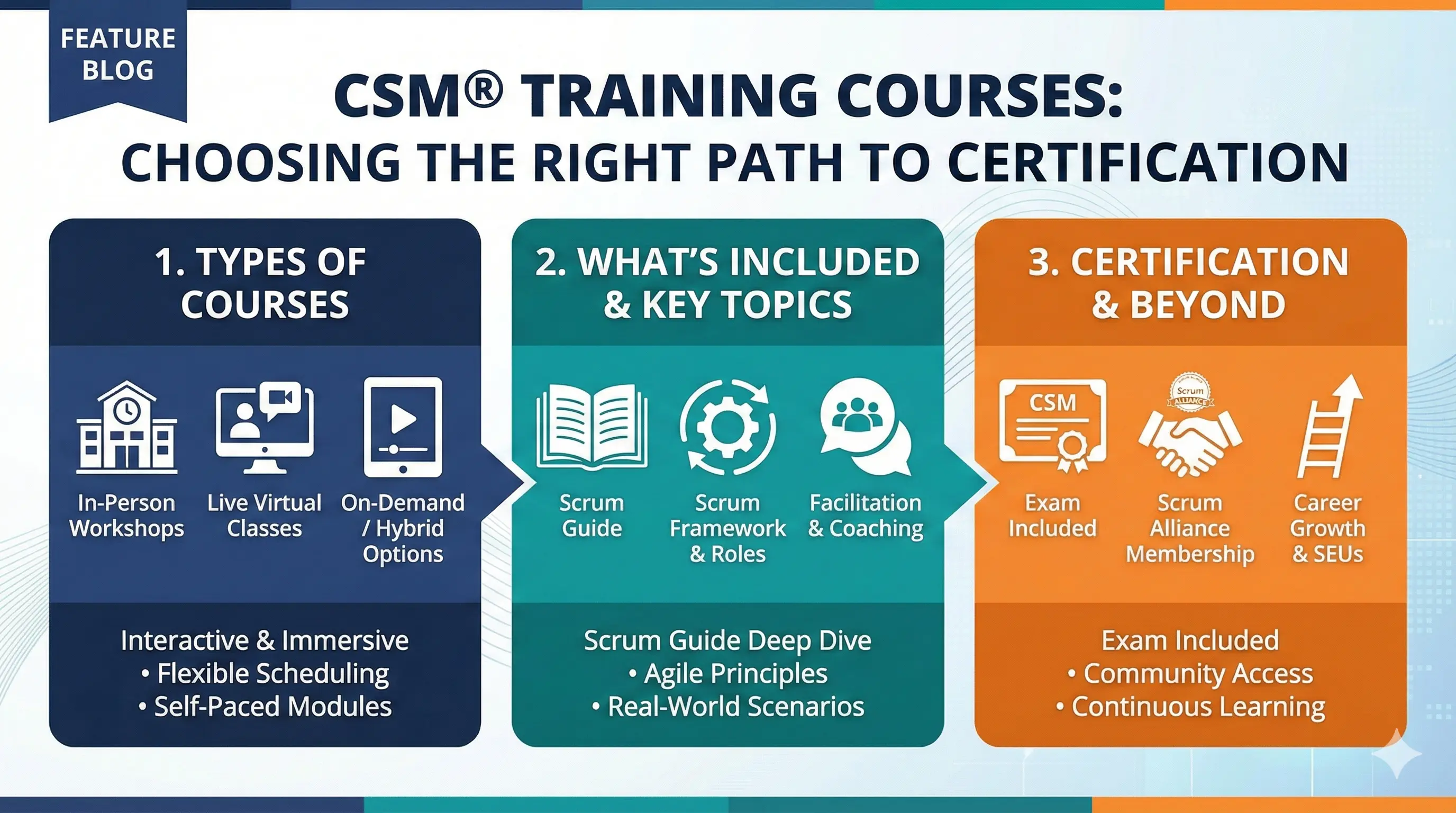
Your CSM course is where you'll learn everything you need to know about Scrum. Unlike certifications that allow self-study, CSM requires completing an approved two-day training—so your choice of course and trainer directly impacts your learning experience.
This guide helps you evaluate your options, understand the differences between training formats, and select a course that fits your learning style, schedule, and budget. For a complete overview of the certification, see our CSM Certification Guide.
How CSM Training Works
Scrum Alliance controls the quality of CSM training through a trainer certification system. Every CSM course worldwide follows the same basic structure.
Certified Scrum Trainers (CSTs)
All CSM courses must be taught by a Certified Scrum Trainer. These individuals have been vetted by Scrum Alliance for their Scrum expertise, teaching ability, and real-world experience. Becoming a CST requires years of practice and a rigorous approval process.
This means regardless of which course you choose, you're getting instruction from someone Scrum Alliance has approved. The baseline quality is consistent—though individual trainers bring different styles, experiences, and specializations.
Standard Curriculum
Every CSM course covers the same core content:
- The Scrum framework and its underlying principles
- Scrum roles: Scrum Master, Product Owner, Developers
- Scrum events: Sprint, Sprint Planning, Daily Scrum, Sprint Review, Sprint Retrospective
- Scrum artifacts: Product Backlog, Sprint Backlog, Increment
- The Scrum Master's responsibilities and servant leadership
- Practical application through exercises and simulations
Trainers have flexibility in how they teach this material, what examples they use, and what additional insights they share—but the foundational curriculum is standardized.
Course Length
CSM training runs a minimum of 14 hours, typically delivered across two days. Some trainers extend to 16 hours to allow more time for exercises and discussion. The format is intensive by design—you'll be actively engaged, not passively watching slides.
In-Person vs. Live Online Training
Your first major decision is whether to attend training in person or participate in a live online course. Both fulfill the CSM requirement, but the experience differs.
In-Person Training
- Face-to-face interaction with trainer and classmates
- Hands-on exercises with physical materials (sticky notes, whiteboards, etc.)
- Easier networking and relationship building
- Fewer distractions from home or work
- Requires travel if no local options
- Typically higher cost ($1,200-1,800+)
- Fixed schedule based on trainer's location
Live Online Training
- Participate from anywhere with internet access
- Interactive via video conference, breakout rooms, digital collaboration tools
- No travel time or expense
- Often lower cost ($995-1,400)
- More schedule flexibility with trainers across time zones
- Requires discipline to stay engaged through screen fatigue
- Home distractions can impact focus
Which Format to Choose
Consider your learning style. If you absorb information better through physical interaction and feed off the energy of a room, in-person is worth the extra investment. If you're self-disciplined, comfortable with video calls, and value convenience, live online works well.
Neither format is inherently better—both produce certified Scrum Masters who pass the exam at similar rates.
What to Look for in a CSM Course
Beyond format, several factors help distinguish great courses from adequate ones.
Trainer Experience and Reviews
Look for trainers with substantial real-world Scrum experience, not just teaching credentials. Read reviews on the Scrum Alliance website and independent platforms. Pay attention to comments about teaching style, engagement level, and practical insights.
Questions to research:
- How long has this trainer been a CST?
- What industries have they worked in?
- Do reviews mention interactive exercises or lecture-heavy delivery?
- How do they handle questions and discussions?
Class Size
Smaller classes (12-20 participants) typically offer more interaction, personalized attention, and opportunities to ask questions. Larger classes (25-40+) may feel more like a seminar. Neither is wrong, but consider what environment helps you learn best.
Interactive Elements
The best CSM courses are highly interactive. Look for descriptions mentioning:
- Scrum simulations
- Group exercises and role-playing
- Breakout discussions
- Real-world case studies
- Hands-on practice with Scrum artifacts
Avoid courses that sound like two days of PowerPoint presentations.
Post-Course Support
Some trainers offer additional value:
- Access to practice exam questions
- Follow-up Q&A sessions
- Community access or alumni groups
- Resources for continued learning
These extras aren't required, but they can enhance your experience and exam preparation.
Refund and Reschedule Policies
Life happens. Before booking, understand what happens if you need to cancel or reschedule. Policies vary significantly between trainers and training companies.
Finding CSM Courses
Scrum Alliance maintains the official directory of approved courses at scrumalliance.org/courses-events/search. You can filter by location, date, format (in-person or online), and language.
Course Providers
CSM training is offered through:
Independent Certified Scrum Trainers — Individual practitioners who teach as their primary business. Often offer personalized experiences and deep expertise in specific industries.
Training Companies — Organizations that employ or contract with multiple CSTs. May offer more scheduling flexibility and corporate training options.
Corporate Training — Many companies bring CSTs in-house to train entire teams. If your employer is considering Scrum adoption, group training can be cost-effective.
When comparing options, focus on the individual trainer's reviews and style rather than just the company name.
Course Format Options
Trainers offer various schedules to accommodate different needs.
Consecutive Days (Most Common)
- Monday-Tuesday or Thursday-Friday
- Get it done quickly with minimal calendar disruption
- Intensive but efficient
Weekend Format
- Saturday-Sunday
- Doesn't require time off work
- Good for those who can't take weekday training
Split Format
- Two Saturdays or two evenings per week
- Spreads learning over more time
- Allows reflection between sessions
- May improve retention for some learners
Evening Sessions
- Multiple shorter sessions across a week or two
- Fits around work schedules
- Requires sustained commitment over more days
Choose based on how you learn best and what your schedule allows. The condensed two-day format works for most people, but split formats can benefit those who need time to process information.
Maximizing Your Course Experience
You're investing significant time and money—get the most from it.
Prepare in Advance
Read the Scrum Guide before your course. It's free and takes about 30 minutes. Arriving with baseline knowledge means you'll spend less time on fundamentals and more time on nuanced discussions and practical application.
Participate Actively
CSM courses are designed for interaction. Volunteer for exercises, share your experiences, ask questions when something isn't clear. Passive attendance means passive learning—and a harder exam.
Network with Classmates
Your fellow participants come from various industries and backgrounds. Exchange contact information. These connections can provide support as you implement Scrum in your own context and may lead to future opportunities.
Take Notes for Exam Prep
While the exam is easy, having notes to review helps. Capture key concepts, especially anything your trainer emphasizes or any areas where you feel less confident.
Engage Fully in Exercises
Scrum simulations and group activities might feel awkward, but they're where real learning happens. Commit to the exercises rather than going through the motions.
CSM Course Costs
Course pricing varies based on trainer reputation, location, and format.
Budget Range: $800-1,000Mid-Range: $1,000-1,300Premium/In-Person: $1,200-1,800+
Remember that the course fee includes your exam attempts, two-year certification, and Scrum Alliance membership. There are no additional fees to budget for.
For a complete breakdown of costs, see our CSM Cost guide.
Next Steps
Once you've selected a course:
- Register and mark your calendar
- Read the Scrum Guide before training begins
- Clear your schedule—two days of full attention
- Complete the course and take your exam within a week
For details on what the course prepares you for, see CSM Exam Format. To understand the complete certification requirements, review CSM Requirements.
After your course, reinforce what you learned with practice questions. Start practicing on PM Drills to solidify your knowledge before the exam.