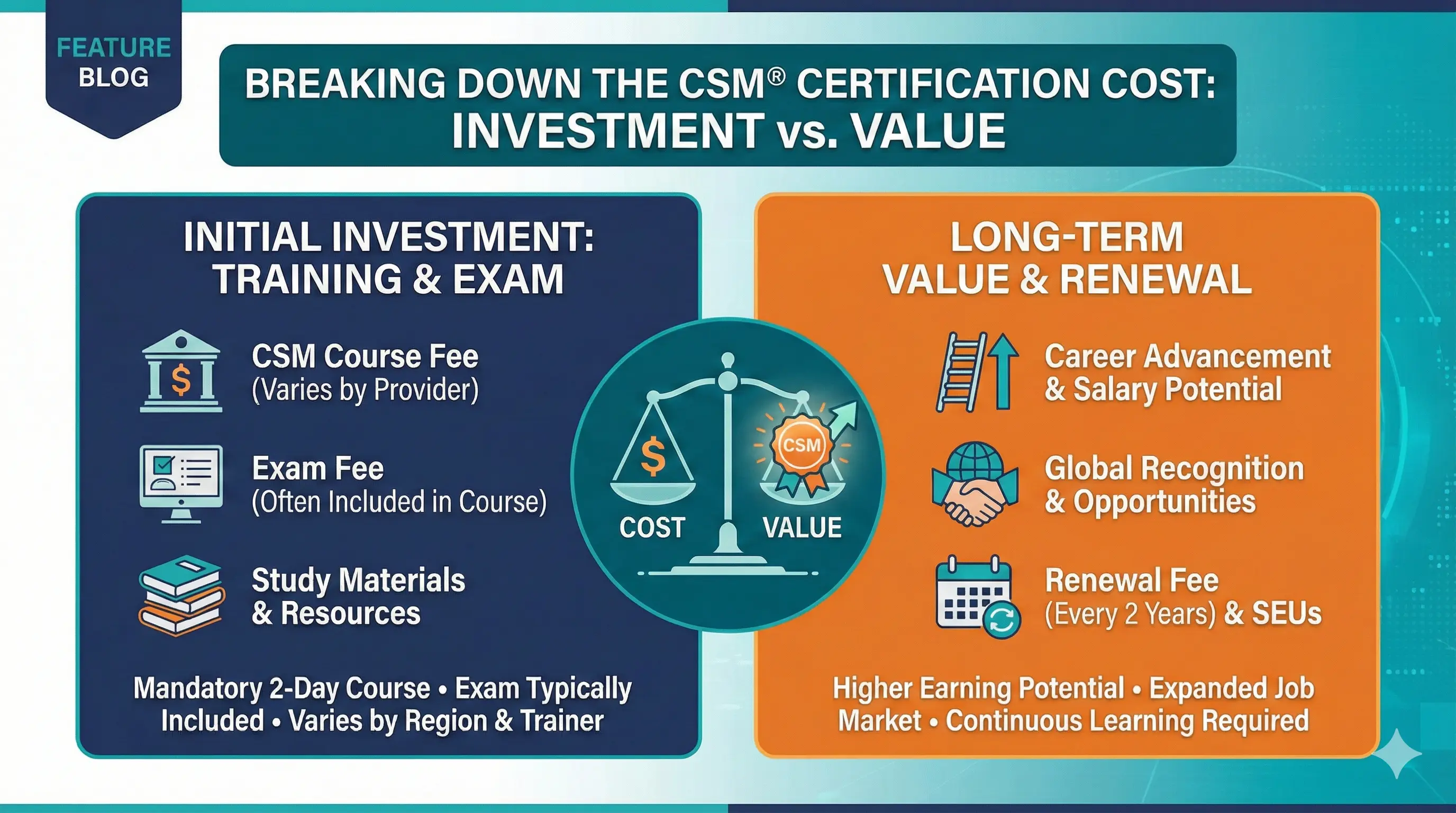
CSM pricing works differently than most certifications. Instead of paying separately for study materials, applications, and exam fees, you pay one price for a training course that includes everything—the instruction, exam attempts, and your two-year certification.
This all-in-one model simplifies budgeting but can cause sticker shock if you're comparing to self-study certifications like CAPM or PSM. This guide breaks down exactly what CSM costs, what's included, and how to reduce your investment. For a complete overview of the certification, see our CSM Certification Guide.
How CSM Pricing Works
Unlike PMI certifications where you buy study materials, submit an application fee, and pay for the exam separately, CSM bundles everything into the course fee.
When you register for a CSM course, that single payment covers:
- Two-day training with a Certified Scrum Trainer
- Course materials and resources
- CSM exam (two attempts included)
- Two-year Scrum Alliance membership
- CSM certification upon passing
There's no separate exam fee, no application cost, and no additional charges to get certified. The course price is your total upfront investment.
CSM Course Cost Ranges
Course pricing varies based on several factors, but here's what to expect:
Budget Range ($800-1,000)
- Often newer trainers building their reputation
- Primarily online formats
- Smaller training companies
- Promotional pricing or group discounts
Mid-Range ($1,000-1,300)
- Experienced trainers with solid reviews
- Mix of online and in-person options
- Most common price point
- Good balance of quality and value
Premium Range ($1,200-1,800+)
- Well-known trainers with extensive experience
- In-person training in major cities
- Smaller class sizes
- Additional resources and post-course support
What Affects Pricing
Trainer ReputationTrainers with years of experience, strong reviews, and industry recognition typically charge more. You're paying for their expertise and teaching ability.
Course FormatIn-person courses cost more than online due to venue rental, materials, and the trainer's travel. Live online training eliminates these costs.
LocationTraining in major metropolitan areas (New York, San Francisco, London) costs more than smaller markets. Online courses eliminate geographic pricing differences.
Class SizeSmaller classes with more individual attention often command premium pricing. Large-group training can be more affordable per person.
Training CompanyIndependent trainers set their own prices. Large training companies may have more overhead but sometimes offer scheduling flexibility and corporate packages.
What's Included in Your Course Fee
Understanding what you're getting helps evaluate whether a course is priced fairly.
Two-Day TrainingThe core product—14-16 hours of instruction from a Certified Scrum Trainer. This includes lectures, discussions, exercises, and Scrum simulations.
Course MaterialsMost courses provide handouts, reference guides, and sometimes books. Some include digital resources you keep after the course.
CSM Exam AccessYour course fee includes two attempts at the CSM exam. Given the 98% pass rate, most people only need one.
Two-Year CertificationUpon passing, you're certified for two years without additional payment.
Scrum Alliance MembershipActive certification includes Scrum Alliance membership, giving you access to resources, community forums, and member benefits.
Additional Extras (Some Courses)
- Practice exam questions
- Post-course Q&A sessions
- Community or alumni group access
- Templates and job aids
- Continuing education resources
When comparing courses, check what extras are included. A slightly higher-priced course with practice exams and ongoing support may offer better value than a bare-bones option.
Renewal Costs
Your CSM certification requires renewal every two years. Budget for this ongoing expense.
Renewal Fee: $100 every two years
SEU Requirement: 20 Scrum Education Units (many free options available)
Two-Year Cost: $100 (plus time spent earning SEUs)
Lifetime Cost Example:
- Initial certification: $1,200 (course)
- 10-year maintenance: $500 (five renewals)
- Total over 10 years: $1,700
Compared to PMP renewal ($150 every three years plus 60 PDUs), CSM renewal is straightforward and affordable.
For complete details on maintaining your certification, see CSM Renewal & SEUs.
CSM Cost vs. Other Certifications
How does CSM compare to alternatives?
CSM (Scrum Alliance)
- Course + Exam: $995-1,500
- Renewal: $100/2 years + 20 SEUs
- Total First Year: $995-1,500
PSM I (Scrum.org)
- Exam Only: $200
- Course (Optional): $1,000-1,500
- Renewal: None (never expires)
- Total First Year: $200 (exam only) or $1,200-1,700 (with course)
CAPM (PMI)
- Exam: $225-300
- Study Materials: $100-500
- Renewal: $150/3 years + 15 PDUs
- Total First Year: $325-800
PMP (PMI)
- Exam: $405-555
- Study Materials: $200-2,000
- Renewal: $150/3 years + 60 PDUs
- Total First Year: $605-2,555
CSM costs more upfront than self-study certifications but includes mandatory training that ensures consistent preparation.
Ways to Reduce CSM Costs
If the price feels steep, several strategies can lower your investment.
Employer Reimbursement
Many companies pay for professional certifications. CSM is particularly common for reimbursement because:
- It directly improves job performance for Scrum teams
- The cost is reasonable compared to other professional development
- Certification is completed quickly (one week vs. months)
Check with your manager or HR department before paying out of pocket.
Early Bird Pricing
Many trainers offer discounts for registering weeks or months in advance. Savings typically range from $50-150.
Group Discounts
Registering with colleagues often unlocks group rates. If multiple people at your company need CSM, coordinate your training.
Online vs. In-Person
Live online courses typically cost $200-400 less than in-person equivalents. If you're comfortable learning via video conference, this is an easy savings.
Promotional Periods
Training companies occasionally run promotions around holidays, end-of-quarter, or when launching new course dates. Following trainers on LinkedIn or subscribing to their newsletters can alert you to deals.
Nonprofit and Student Discounts
Some trainers offer reduced rates for nonprofit employees, students, or career changers. It doesn't hurt to ask.
Employer-Sponsored Group Training
If your organization is adopting Scrum, bringing a trainer in-house for team training often costs less per person than individual public courses.
Is CSM Worth the Cost?
Whether $1,000-1,500 is a good investment depends on your situation.
When CSM Is Worth It
You want a Scrum Master role. CSM is the most recognized Scrum Master certification. Many job postings specifically require or prefer it.
Your employer values it. If your company uses Scrum and recognizes CSM, the certification signals competence and commitment.
You learn better with structured training. The mandatory course ensures you understand Scrum properly—not just exam content but practical application.
You want to transition careers. CSM provides credibility when moving into agile roles without prior Scrum experience.
When to Consider Alternatives
Budget is tight and you're self-motivated. PSM I costs $200 for the exam with no required course. If you can learn independently, it's more affordable.
You want broader agile knowledge. PMI-ACP covers multiple agile methodologies, not just Scrum. It may suit generalist roles better.
Your employer doesn't recognize CSM. If no one in your industry cares about the certification, the investment may not pay off.
Return on Investment
Scrum Master salaries typically range from $80,000-130,000 depending on experience and location. Even at entry level, CSM often pays for itself within the first month of a salary increase or new role.
For detailed career information, see Scrum Master Career Path.
Next Steps
Once you've budgeted for CSM, your next step is selecting a course. Consider the factors above—trainer reputation, format, and what's included—not just the price.
For guidance on choosing training, see CSM Training Courses. To confirm you meet the simple requirements, review CSM Requirements.
Ready to start preparing? Practice with CSM questions on PM Drills to build familiarity with Scrum concepts before your course.