Study strategies, exam breakdowns, and certification advice to help you pass.
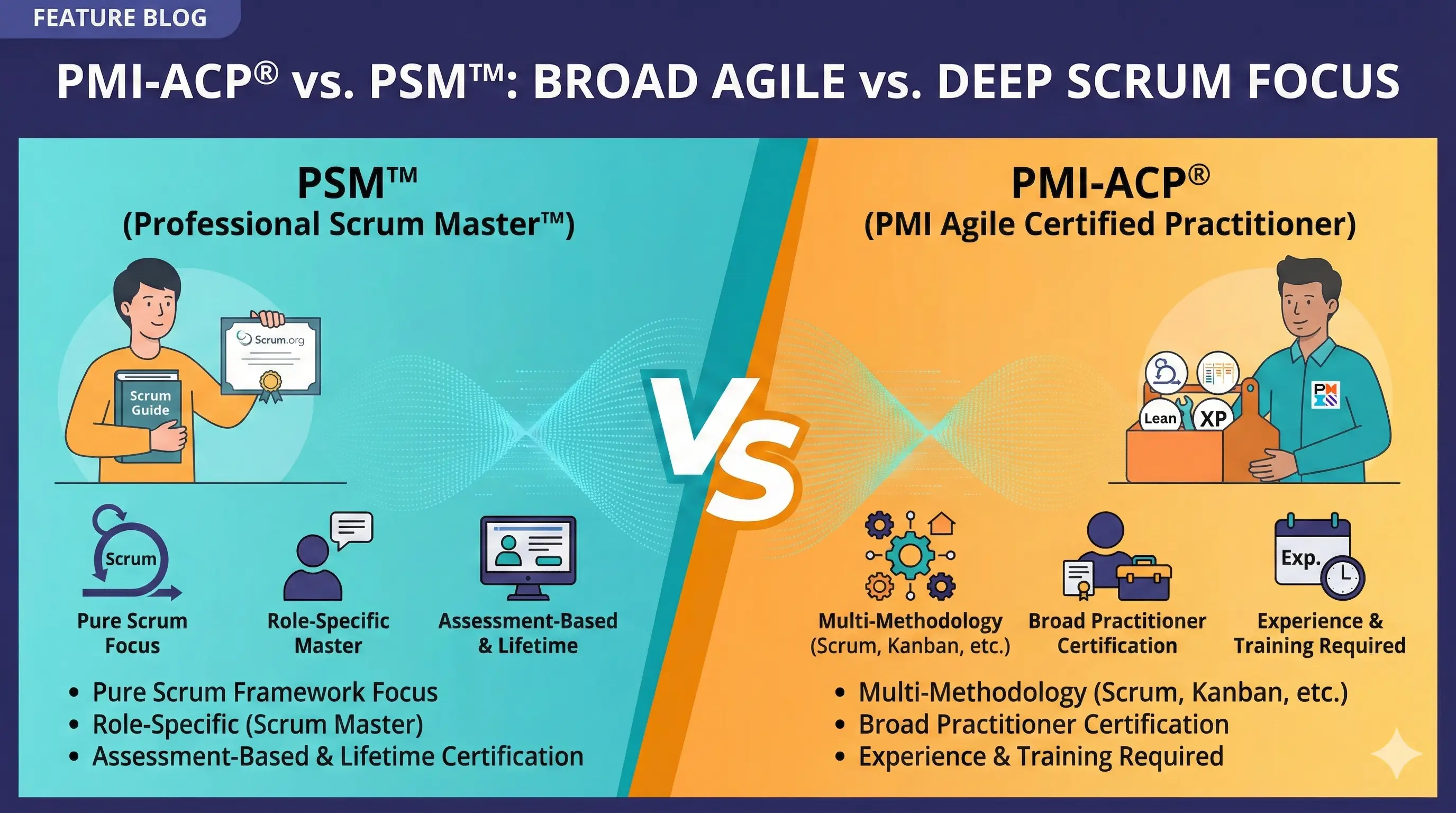
PMI-ACP and PSM are both respected agile certifications, but they differ significantly in scope, requirements, and purpose. PMI-ACP covers multiple methodologies (Scrum, Kanban, Lean, XP) and requires documented agile experience, while PSM focuses exclusively on Scrum with no prerequisites beyond passing the exam. This guide compares everything: methodology scope, experience and education requirements, exam format (120 questions in 3 hours vs 80 questions in 60 minutes), total costs ($700–1,200 vs $200), and renewal requirements (30 PDUs every 3 years vs never expires). We break down which certification fits different career situations and whether pursuing both makes sense.
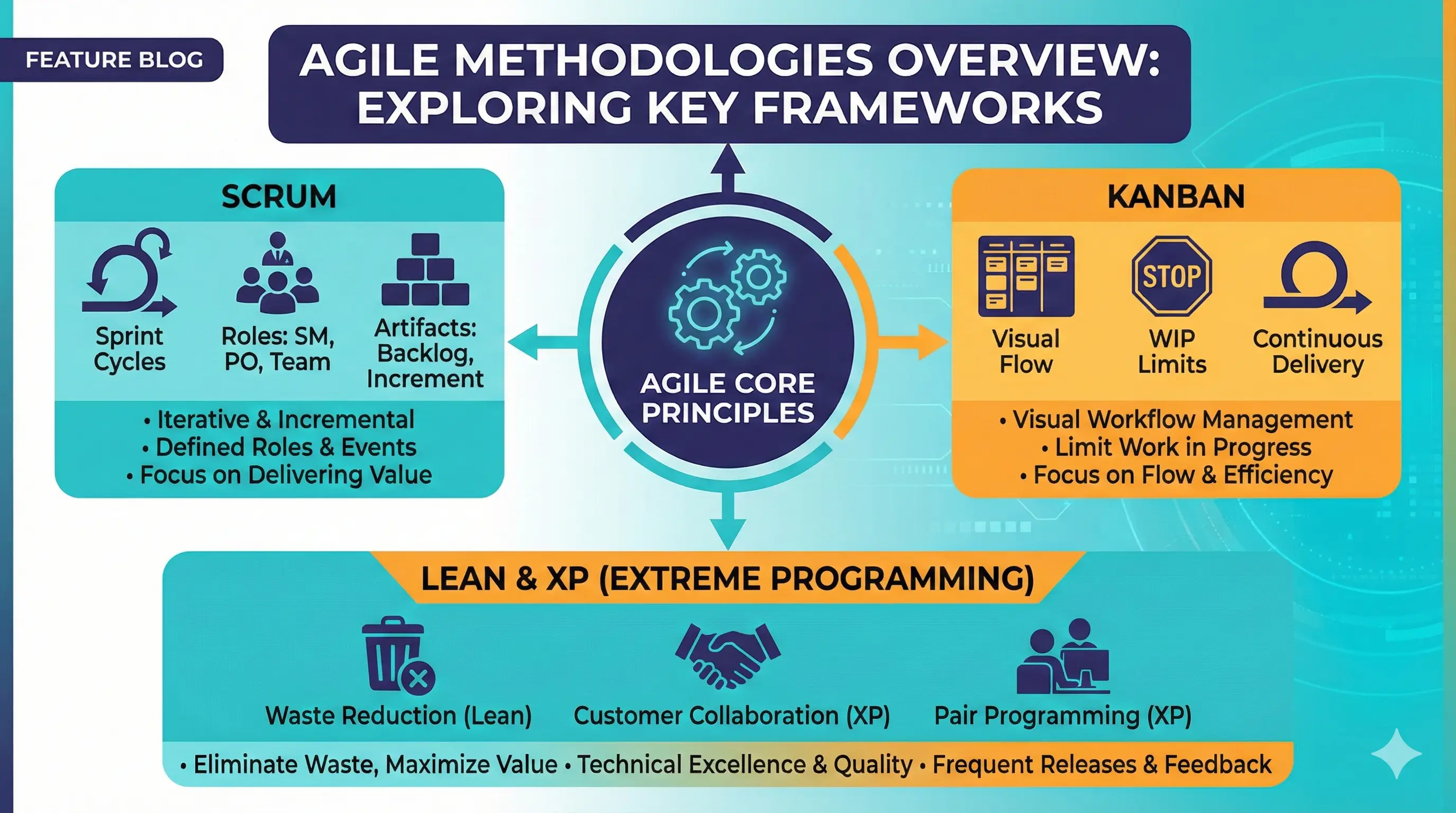
The PMI-ACP exam tests your knowledge across multiple agile methodologies, not just Scrum. This comprehensive guide covers everything you need to know about Scrum (roles, events, artifacts), Kanban (flow, WIP limits, cumulative flow diagrams), Lean (seven wastes, value stream mapping, Kaizen), and Extreme Programming (TDD, pair programming, continuous integration). We also cover Crystal, DSDM, and Feature-Driven Development at the level required for the exam. Learn when each methodology applies, how to identify them in scenario questions, and how they compare to each other—essential knowledge for PMI-ACP success.
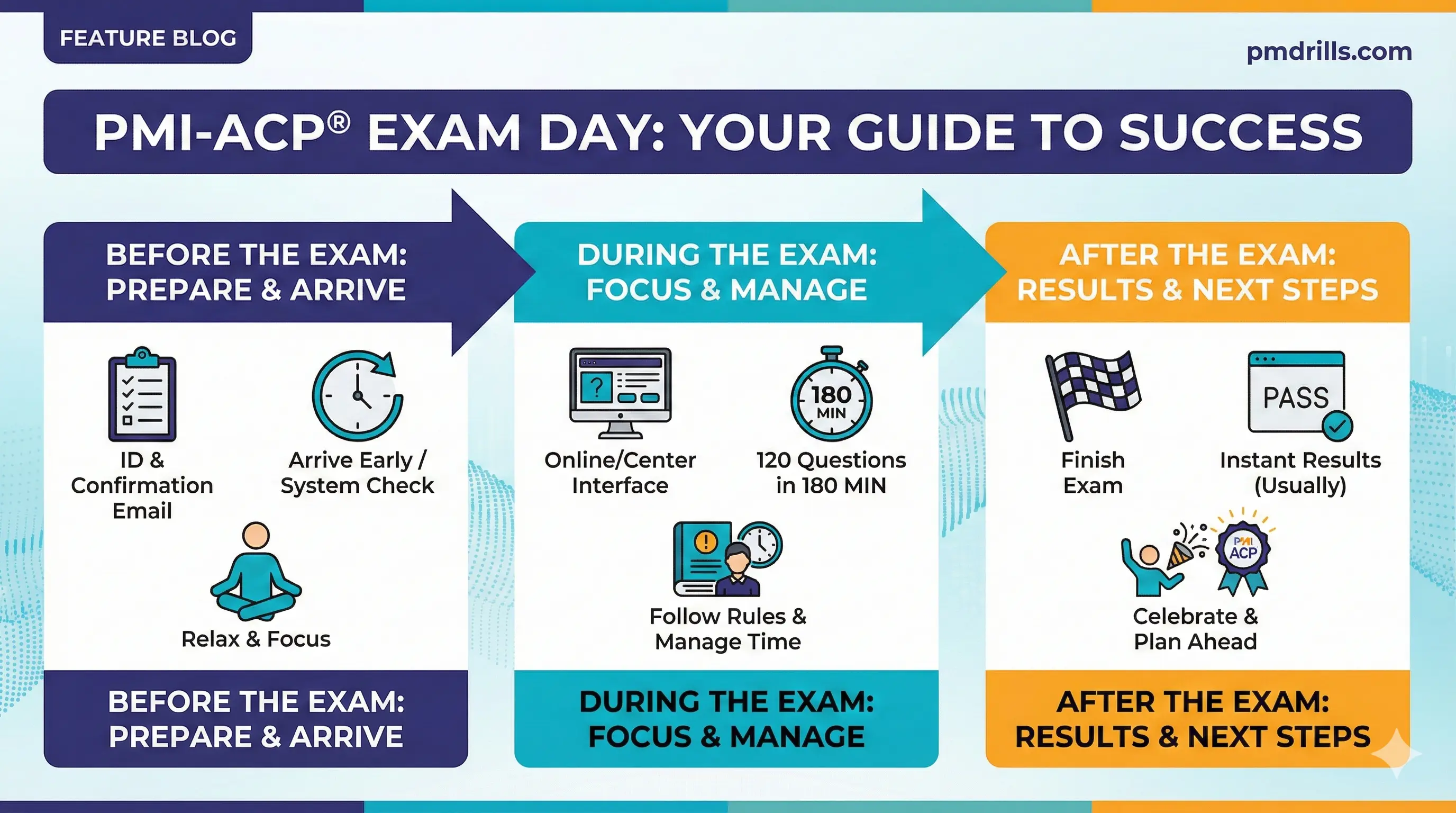
Exam day success requires more than just knowledge—you need to know exactly what to expect and how to manage three hours of focused testing. This guide covers everything: how to spend the final days before your exam (and what not to do), the complete test center experience from check-in to completion, online proctoring setup and requirements, pacing strategies to stay on track through all 120 questions, and how to handle difficult or methodology-specific questions. We also cover what happens after you submit, how to interpret your score report, and what to do whether you pass or need to retake.
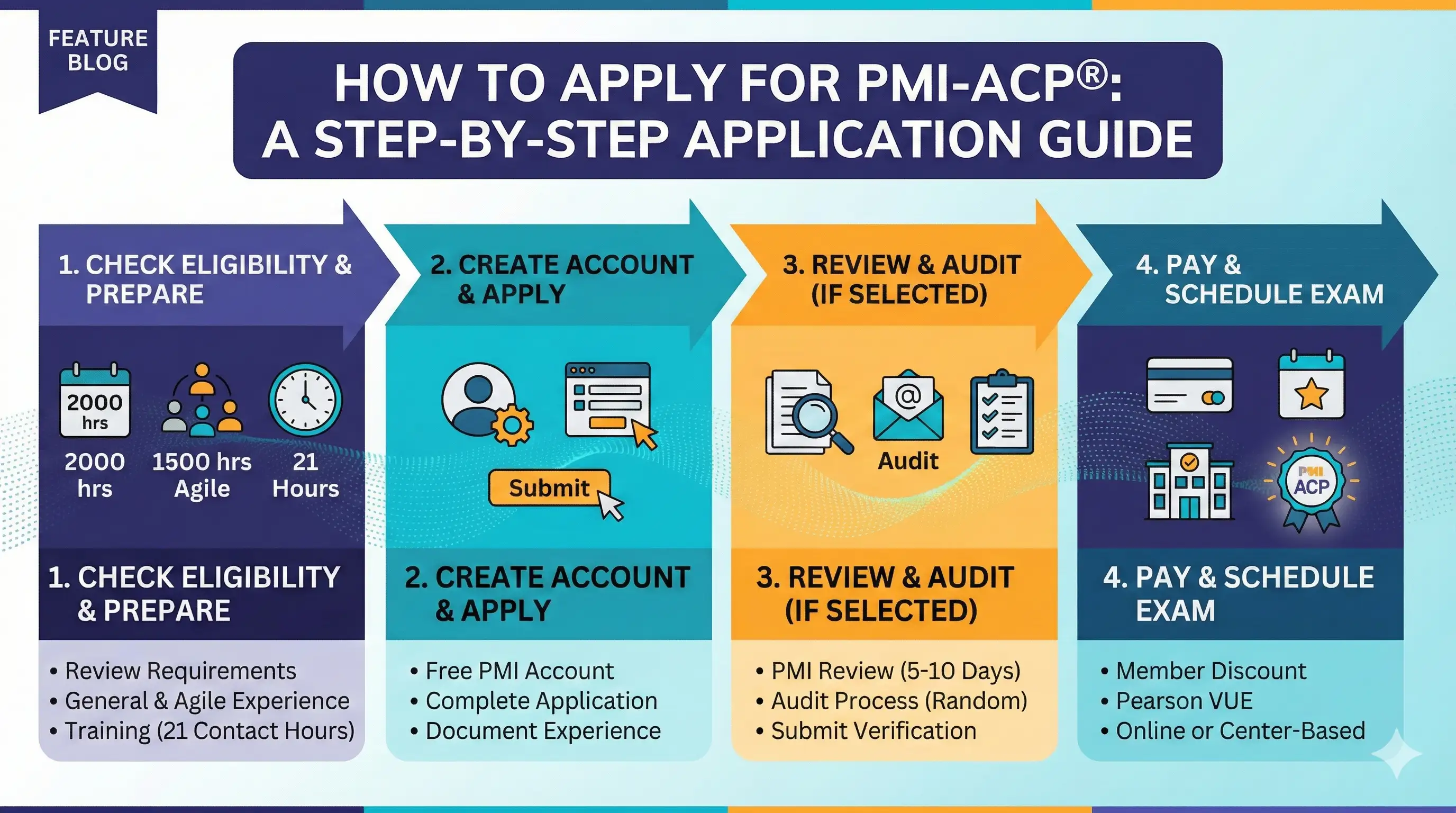
The PMI-ACP application requires documenting two separate types of experience—2,000 hours of general project work and 1,500 hours of agile-specific experience—plus 21 hours of agile education. This step-by-step guide walks through the entire process: preparing your documentation before you begin, creating your PMI account, entering general and agile experience with effective descriptions, recording your education hours, and submitting payment. We also cover what happens after submission, how to handle an audit if selected, and how to schedule your exam through Pearson VUE once approved.
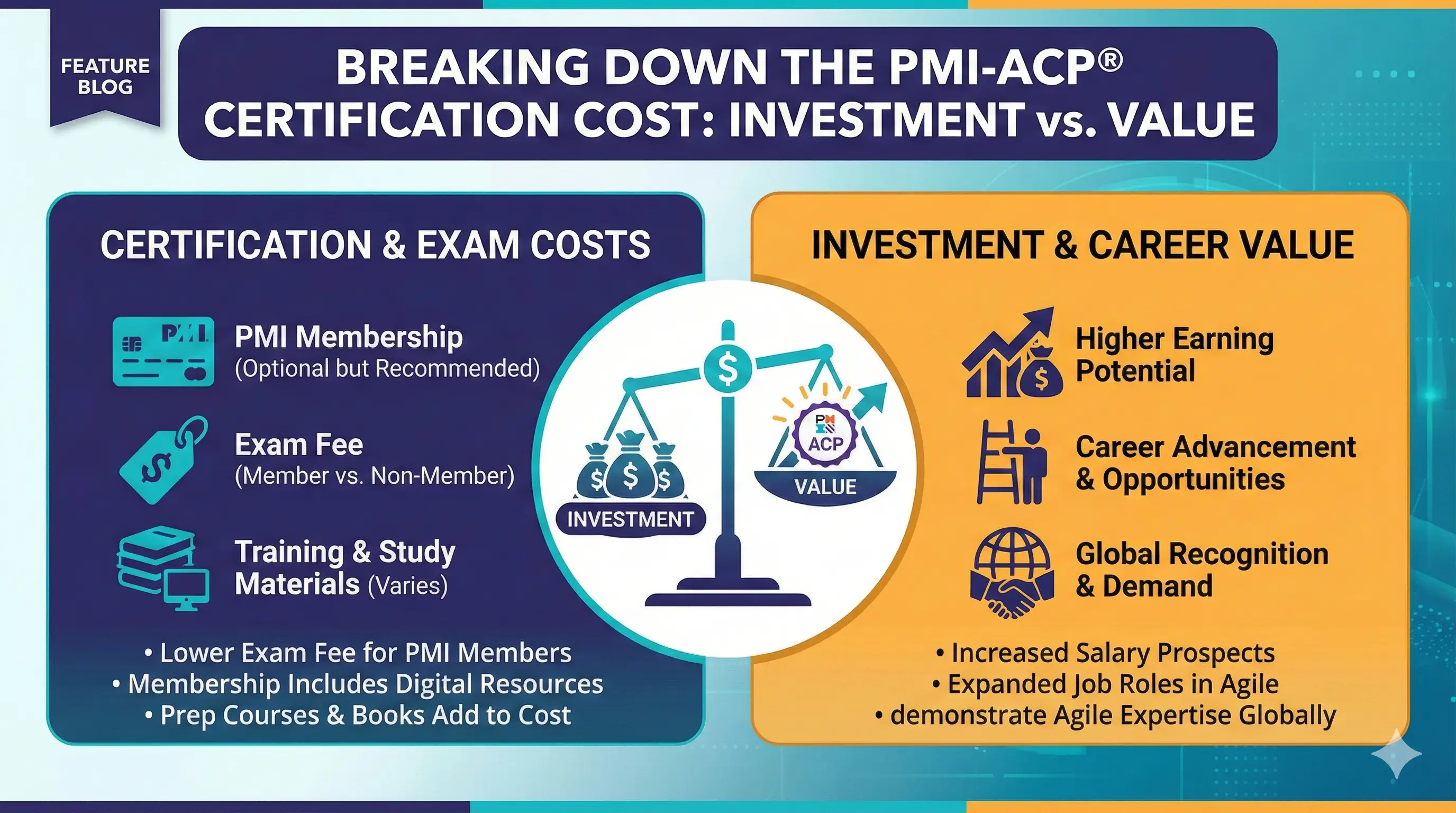
PMI-ACP certification costs between $600 and $1,600 depending on your preparation approach, with the exam fee alone running $435 for PMI members or $495 for non-members. This guide breaks down every cost component: exam fees, PMI membership (and whether it's worth the $149 investment), the required 21-hour education requirement ranging from $30 to $700+, and study materials. We provide three complete budget scenarios—budget, typical, and premium paths—plus comparison to CSM and PSM costs so you can make an informed investment decision.
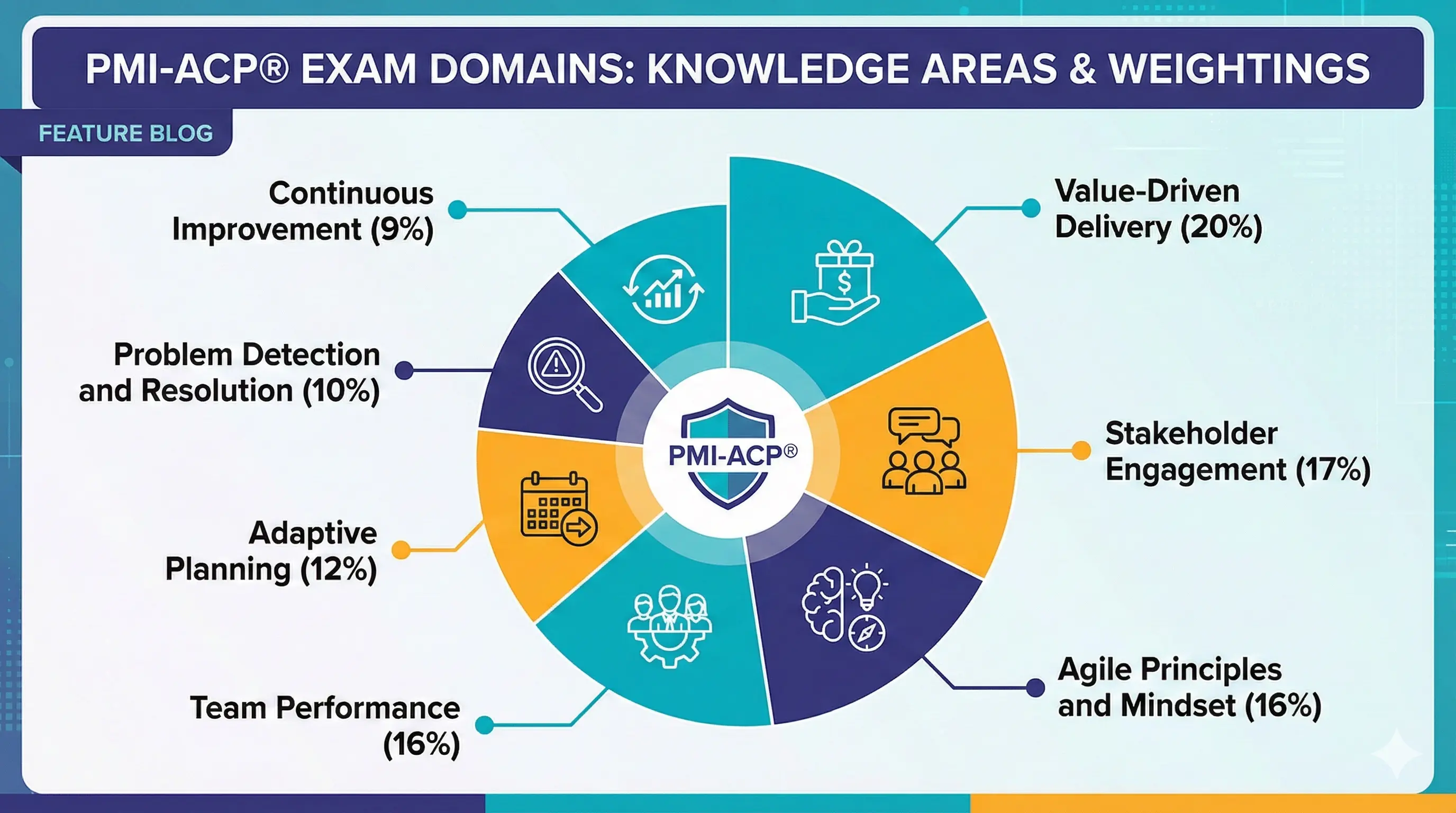
The PMI-ACP exam tests seven distinct domains, each weighted differently: Value-Driven Delivery (20%), Stakeholder Engagement (17%), Agile Principles and Mindset (16%), Team Performance (16%), Adaptive Planning (12%), Problem Detection and Resolution (10%), and Continuous Improvement (9%). This guide breaks down exactly what's covered in each domain, the key concepts you need to master, how questions typically appear on the exam, and specific study tips for each area. We also cover the cross-cutting tools and techniques—like burn-down charts, Kanban boards, and retrospectives—that appear throughout the exam regardless of domain.
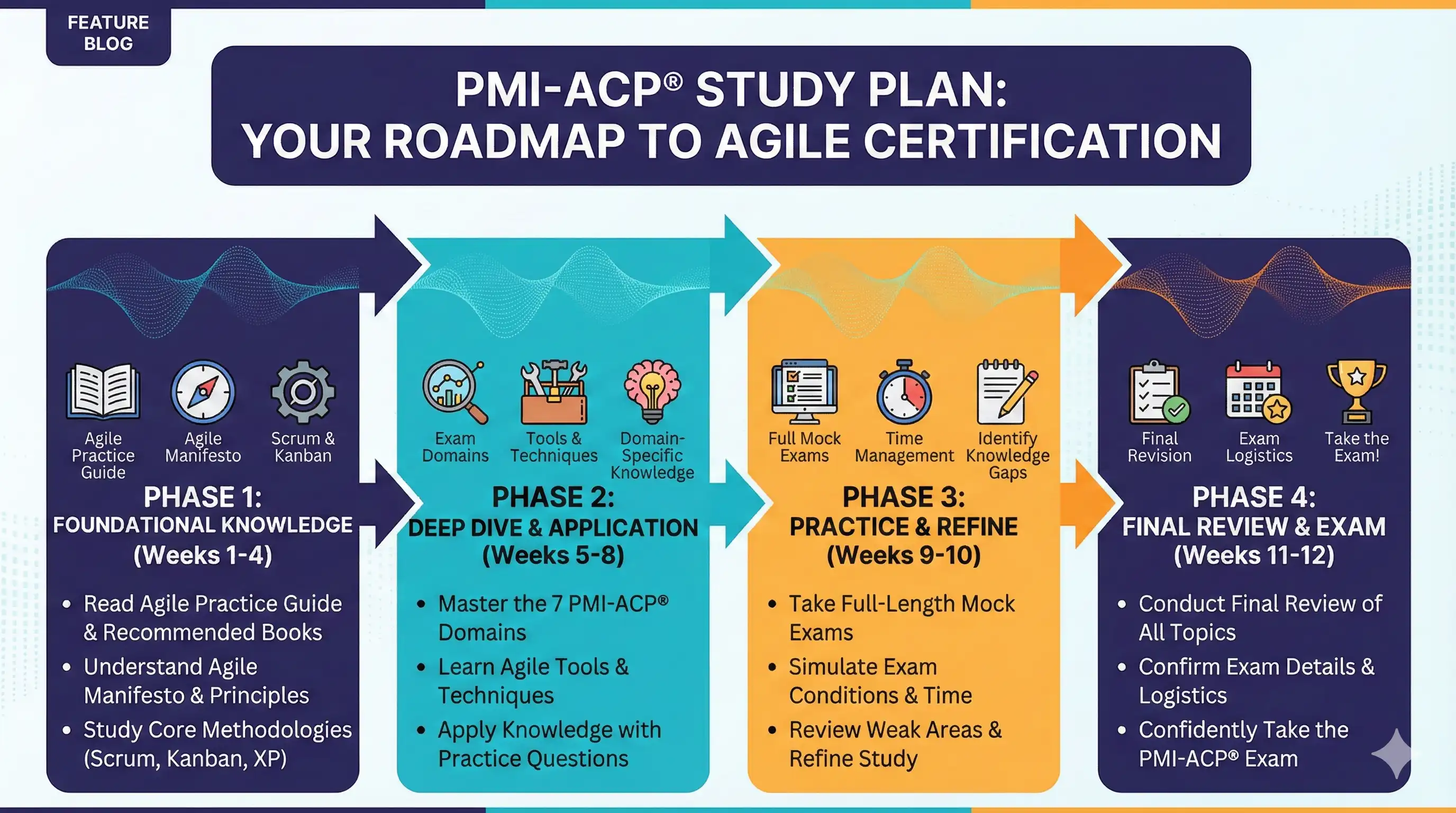
Most PMI-ACP candidates need 80–120 hours of study over 6–10 weeks, depending on their existing agile experience. This guide provides three complete study schedules—a 6-week intensive plan for experienced practitioners, an 8-week balanced plan for working professionals, and a 10-week extended plan for those newer to multiple methodologies. We cover essential resources including the required 21-hour education, the Agile Practice Guide, and practice question strategies. Learn how to track your progress by domain, use practice questions effectively, and recognize when you're truly ready to schedule your exam.
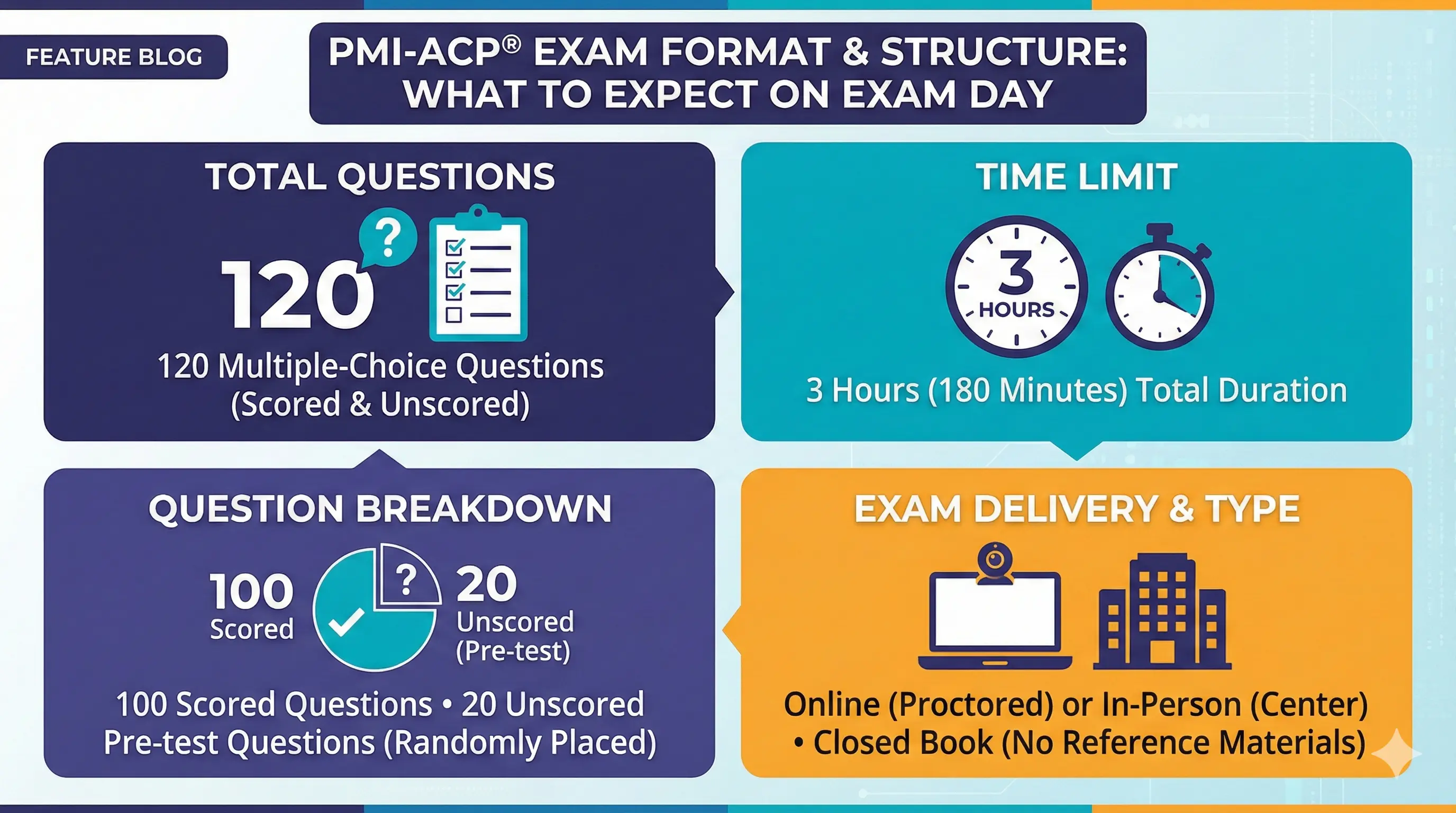
The PMI-ACP exam consists of 120 questions delivered over 3 hours with no scheduled breaks, testing your knowledge across seven domains and multiple agile methodologies including Scrum, Kanban, Lean, and XP. This guide covers all question types you'll encounter (multiple choice, multiple response, matching, and hotspot), how PMI's pass/fail scoring works, and the pros and cons of test center versus online proctoring. We also share time management strategies to help you maintain focus and pace yourself through the full exam.
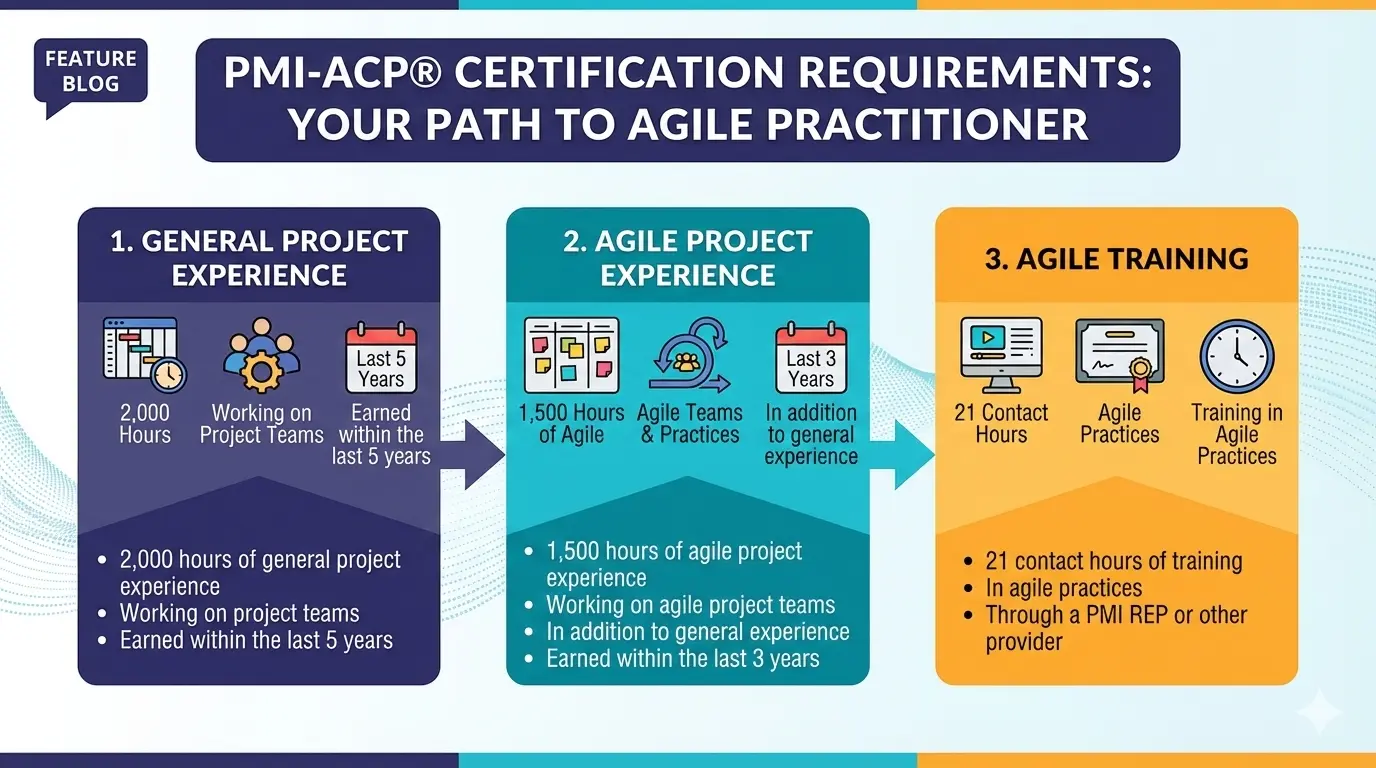
The PMI-ACP has the most complex eligibility requirements of any agile certification, requiring three separate qualifications: 2,000 hours of general project experience, 1,500 hours of agile-specific experience, and 21 contact hours of agile education. This guide breaks down exactly what counts toward each requirement, how to document your experience effectively, and what to expect if PMI audits your application. We also cover options if you don't yet qualify and how PMP holders can satisfy the general experience requirement automatically.
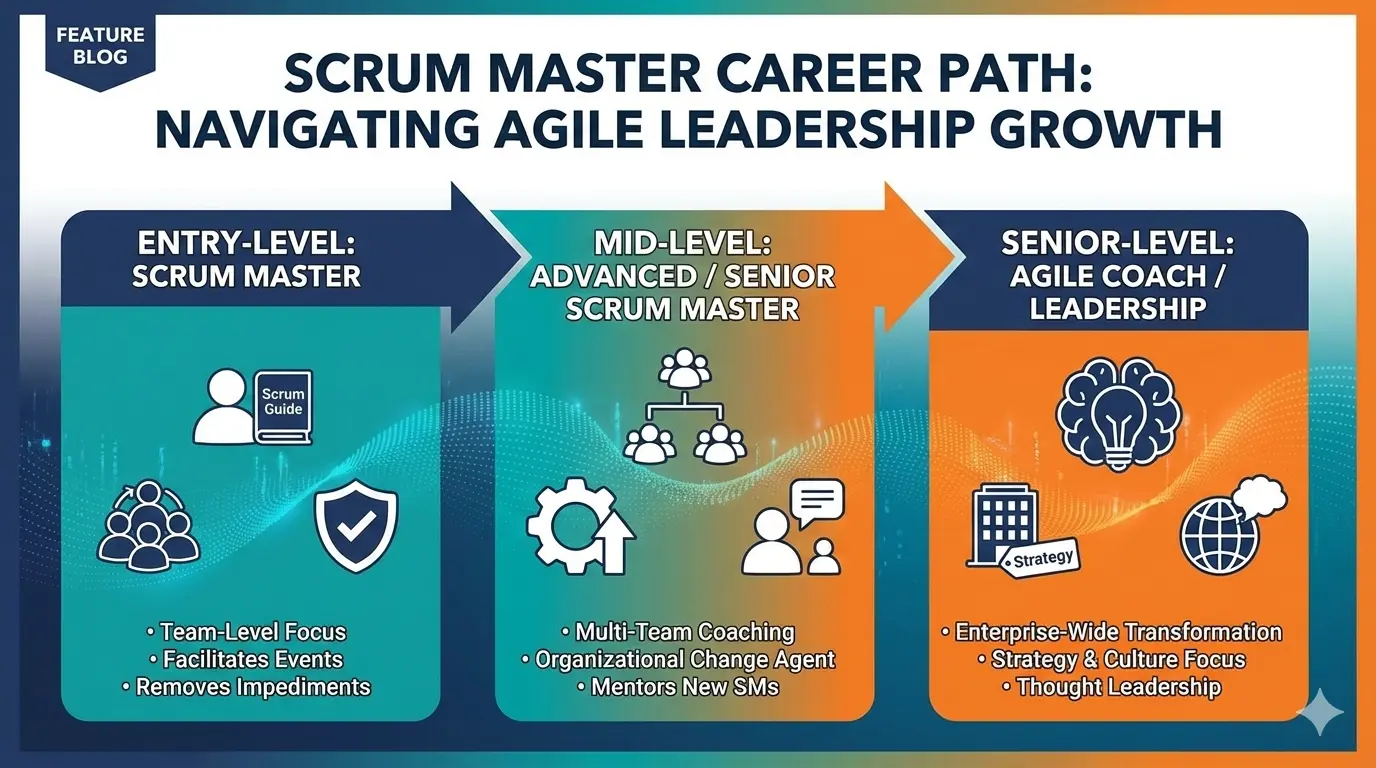
The Scrum Master career path progresses from single-team Scrum Master ($70,000-90,000) through Senior Scrum Master ($110,000-140,000) to Agile Coach and enterprise roles ($130,000-180,000+). Common entry points include developers transitioning, project managers adopting agile, and career changers with certification. Advancement requires developing facilitation, coaching, and organizational influence skills. Certification progression follows CSM → A-CSM → CSP-SM, with complementary options like SAFe and ICAgile. High-demand industries include technology, financial services, healthcare IT, and consulting. Career growth depends on continuous learning, community involvement, and building a documented track record of team improvement.
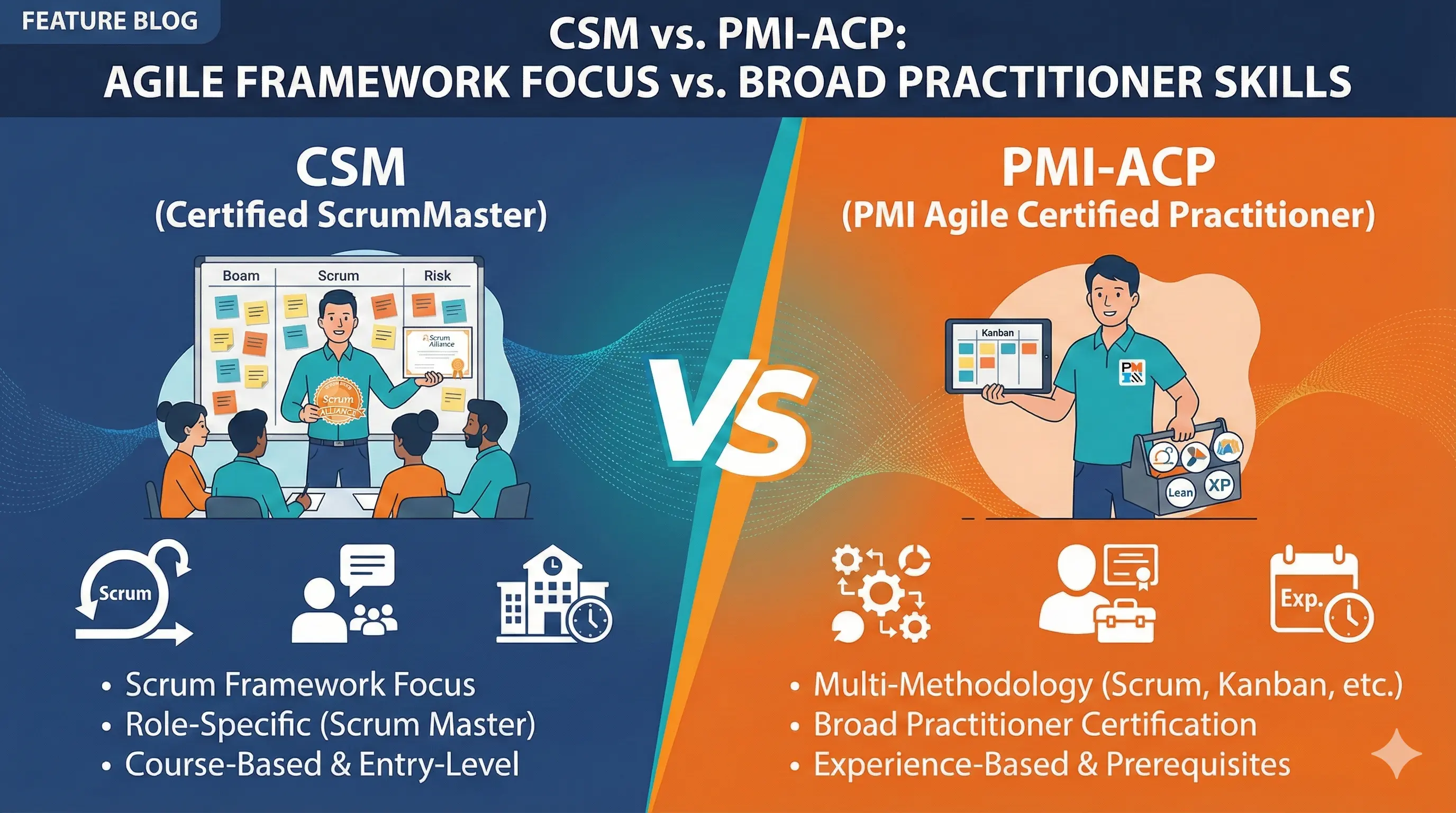
CSM and PMI-ACP serve different purposes. CSM focuses specifically on Scrum and the Scrum Master role with no prerequisites, a mandatory 2-day course, and an easy exam (~98% pass rate) for $995-1,500. PMI-ACP covers multiple agile methodologies, requires 1,500 hours of agile experience, and has a harder exam (~80% pass rate) for $435-555 plus training costs. Choose CSM for Scrum Master roles and quick entry into agile. Choose PMI-ACP for methodology-agnostic roles, to complement existing PMI certifications, or when you need to demonstrate broad agile expertise.
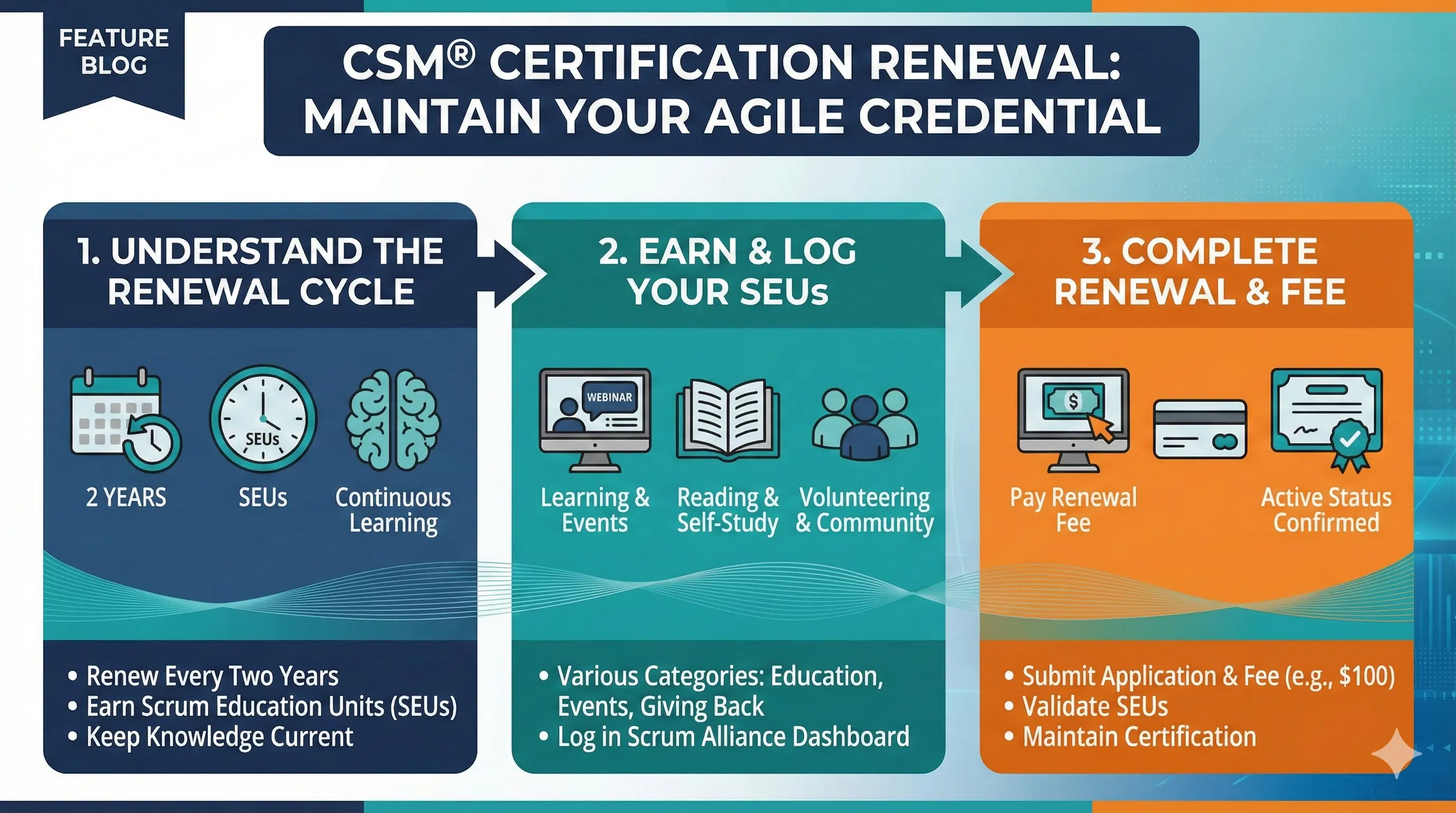
CSM certification requires renewal every two years: earn 20 Scrum Education Units (SEUs) and pay a $100 fee. SEUs equal roughly one hour of learning and can be earned through courses, events, self-study, coaching, and community contributions. Many free options exist—Scrum Alliance webinars, books, podcasts, and workplace learning all count. Log SEUs in the Scrum Alliance portal throughout your certification period, then pay the renewal fee before expiration. Don't let your certification lapse, as you'd need to retake the course and exam to recertify.
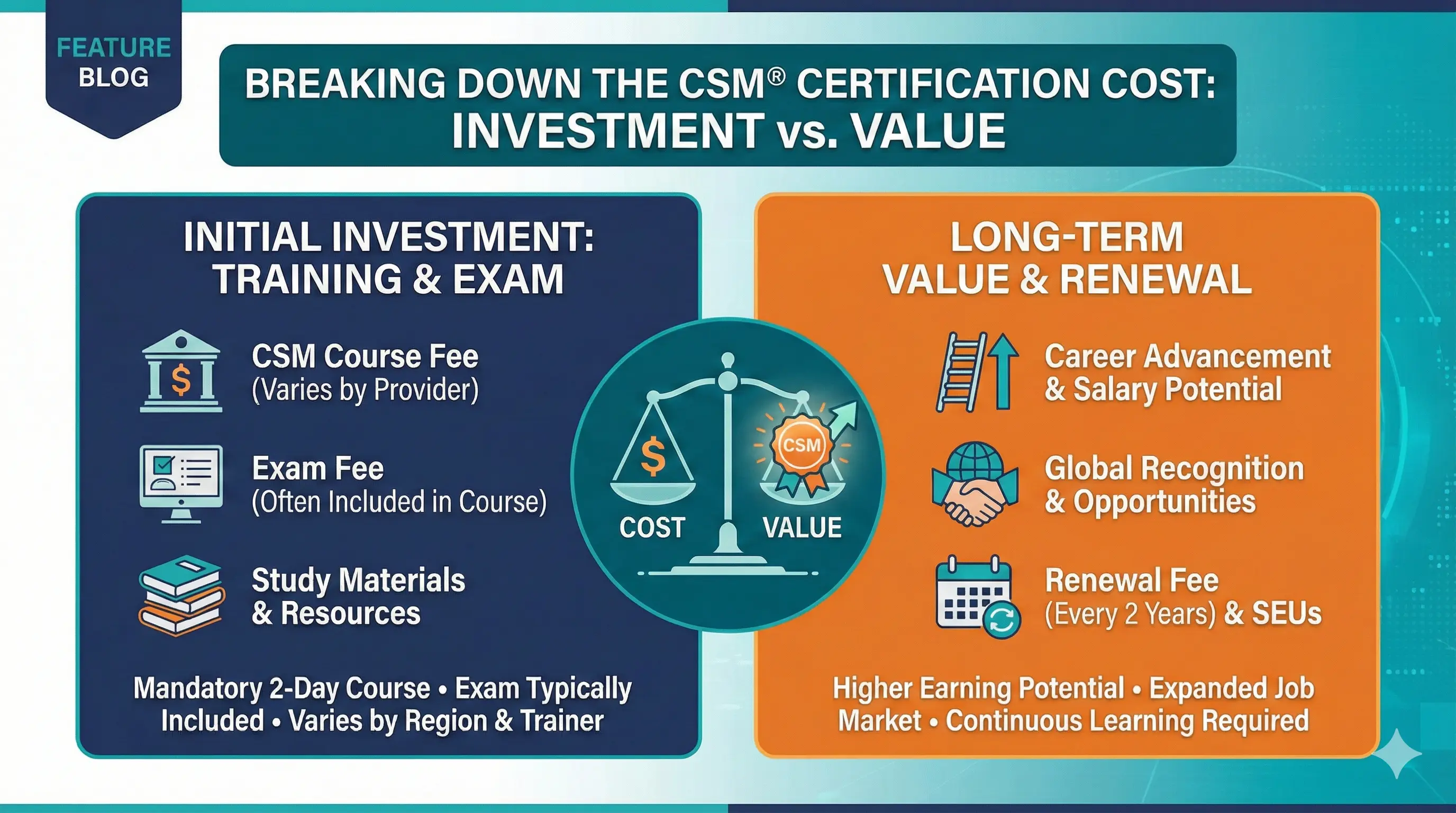
CSM costs $995-1,500 total, with the course fee covering training, exam (two attempts), and two-year certification. Pricing varies by trainer reputation, format (online vs. in-person), and location. Renewal costs $100 every two years plus 20 SEUs. Reduce costs through employer reimbursement, early bird pricing, group discounts, or choosing online training. Compared to PSM ($200 exam-only option), CSM costs more but includes mandatory training. The investment typically pays off quickly given Scrum Master salary ranges of $80,000-130,000.
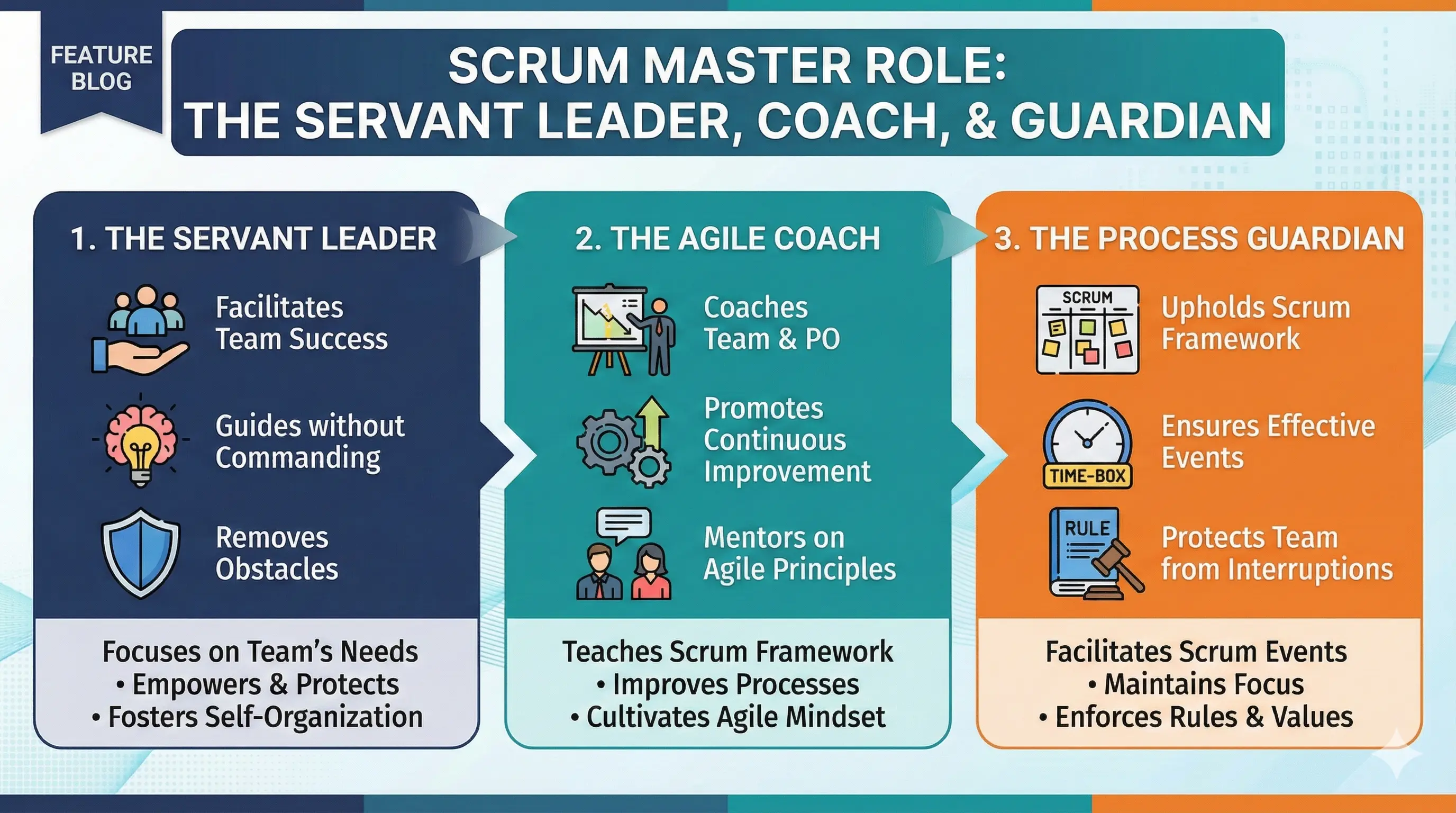
The Scrum Master is a servant leader accountable for team effectiveness and proper Scrum implementation—not a project manager with a different title. Core responsibilities include facilitating Scrum events, removing impediments, coaching the team, and protecting them from distractions. Unlike project managers who direct and control, Scrum Masters enable self-organization through influence rather than authority. Effective Scrum Masters need facilitation, coaching, communication, and conflict resolution skills. The role suits people who prefer helping others succeed over having direct control.
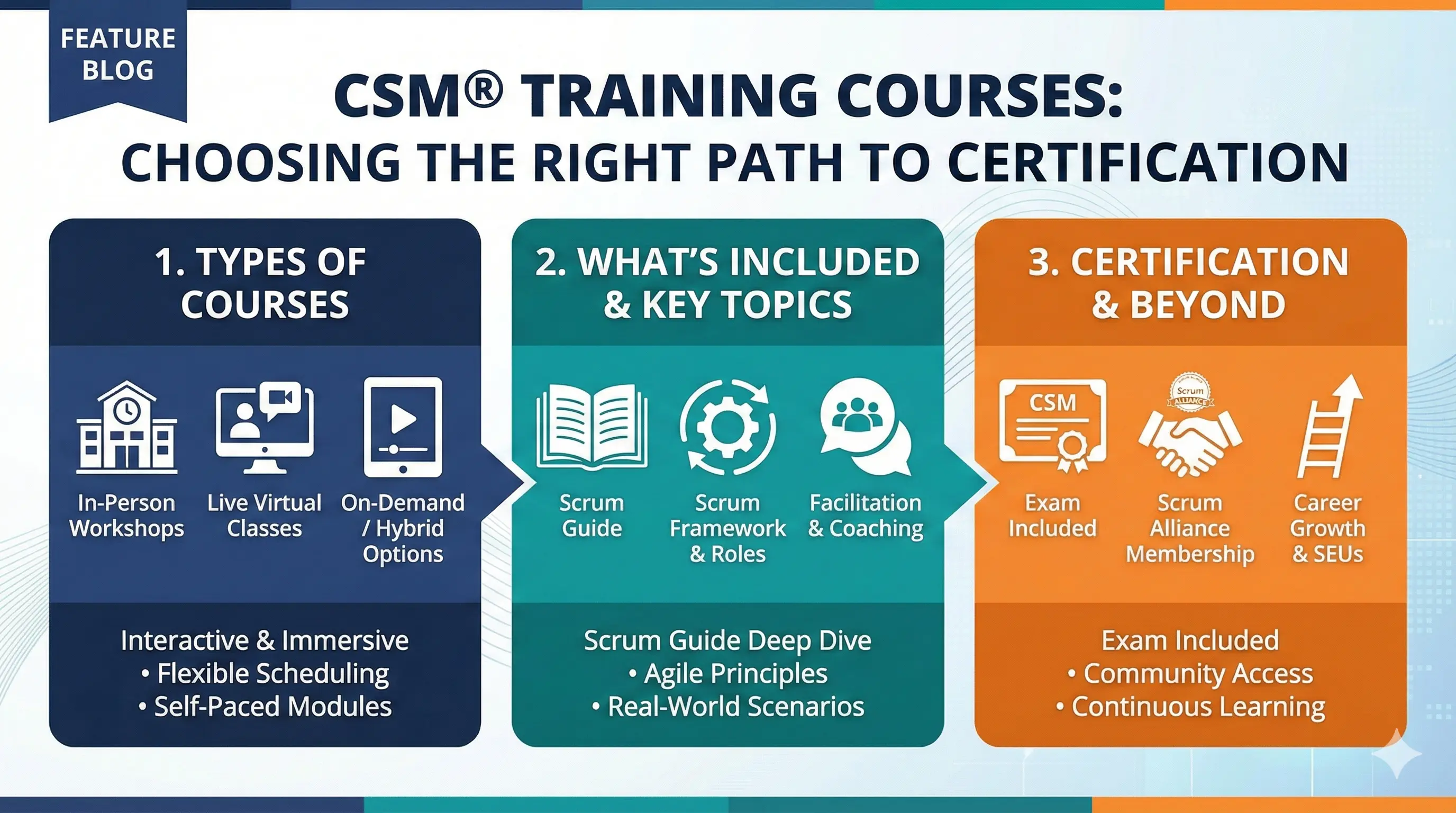
All CSM courses must be taught by Certified Scrum Trainers (CSTs) approved by Scrum Alliance, ensuring consistent quality. Choose between in-person training ($1,200-1,800+) for hands-on interaction or live online courses ($995-1,400) for convenience. Evaluate trainers based on reviews, experience, class size, and interactive elements. Courses run 14-16 hours over two days in various formats (consecutive days, weekends, or split sessions). Maximize your investment by reading the Scrum Guide beforehand, participating actively, and taking the exam soon after training.
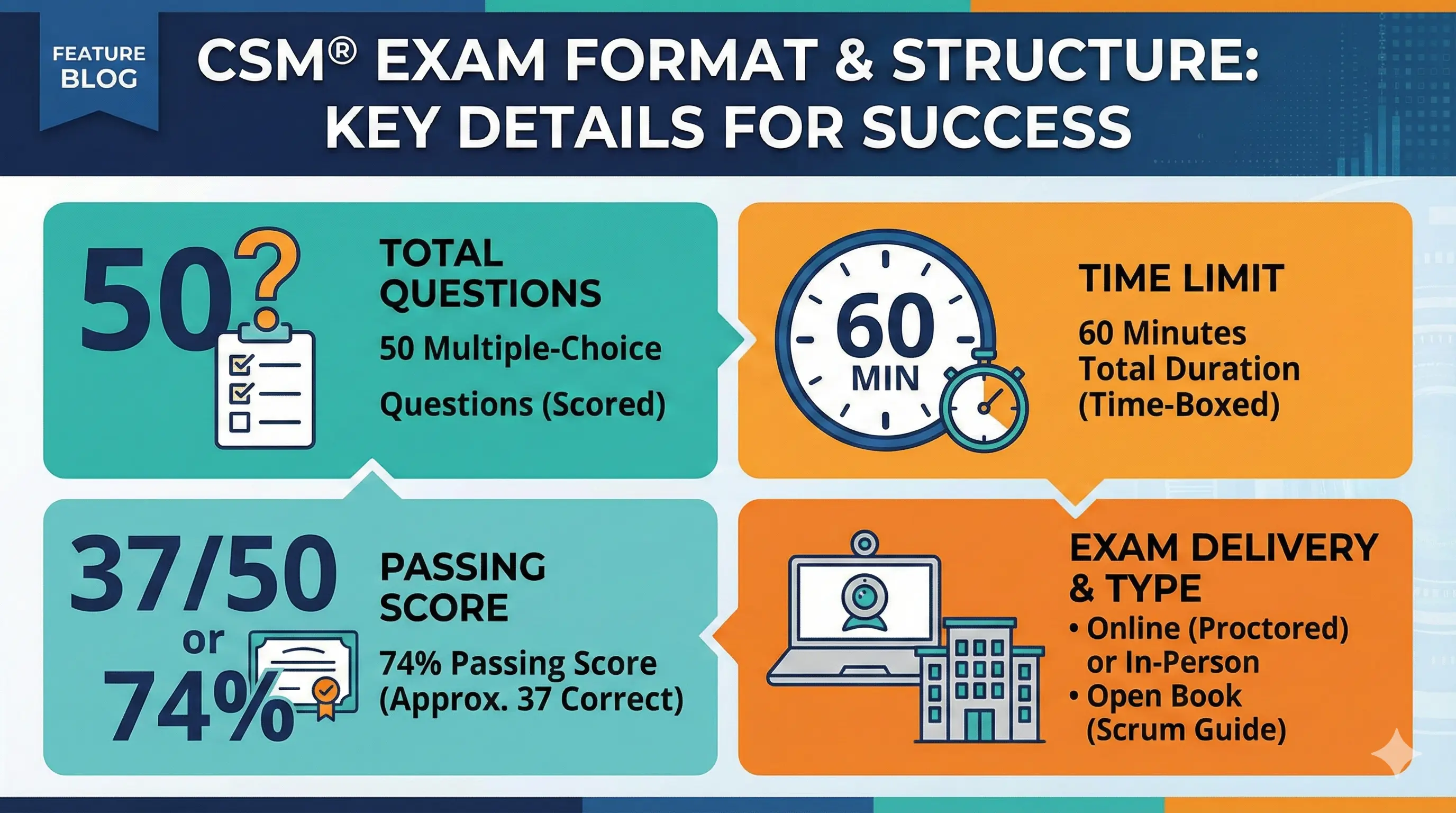
The CSM exam is a 50-question, 60-minute online test with a 74% passing score (37/50) and approximately 98% pass rate. Questions are straightforward multiple-choice covering Scrum framework, roles, events, and artifacts. The exam is unproctored and technically open-book, taken anytime within 90 days of completing your course. Two attempts are included with your course fee. The key to passing: pay attention during training, review the Scrum Guide, and take the exam soon after your course.
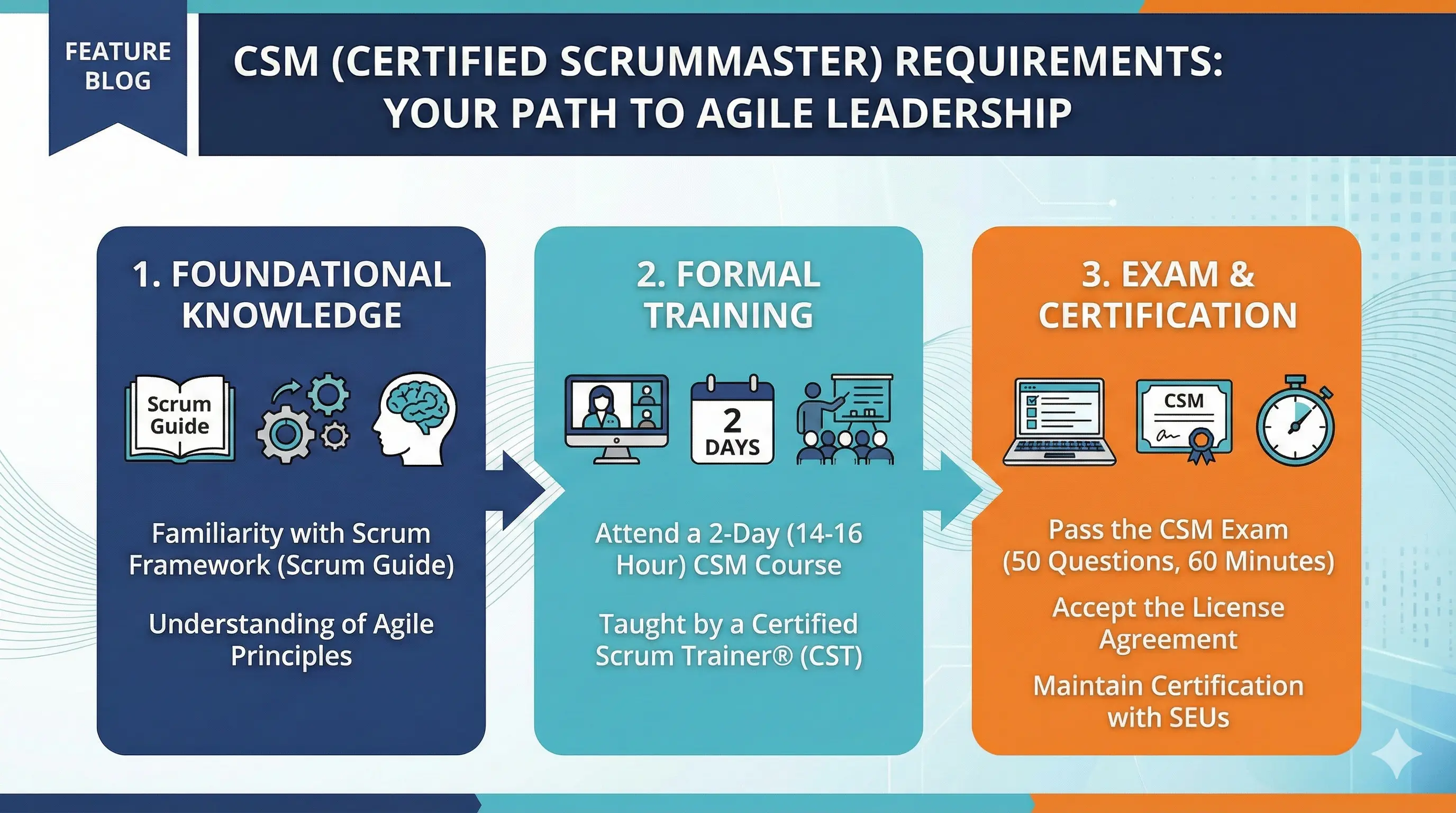
CSM has the simplest requirements of any major PM certification—no experience, education, or application needed. The only requirement is completing a mandatory 2-day course taught by a Certified Scrum Trainer, then passing a 50-question exam (74% to pass, ~98% pass rate). Additional requirements include being 18+, accepting Scrum Alliance's license agreement, and creating a profile. The course-based approach means everyone with CSM has had hands-on training, not just self-study.
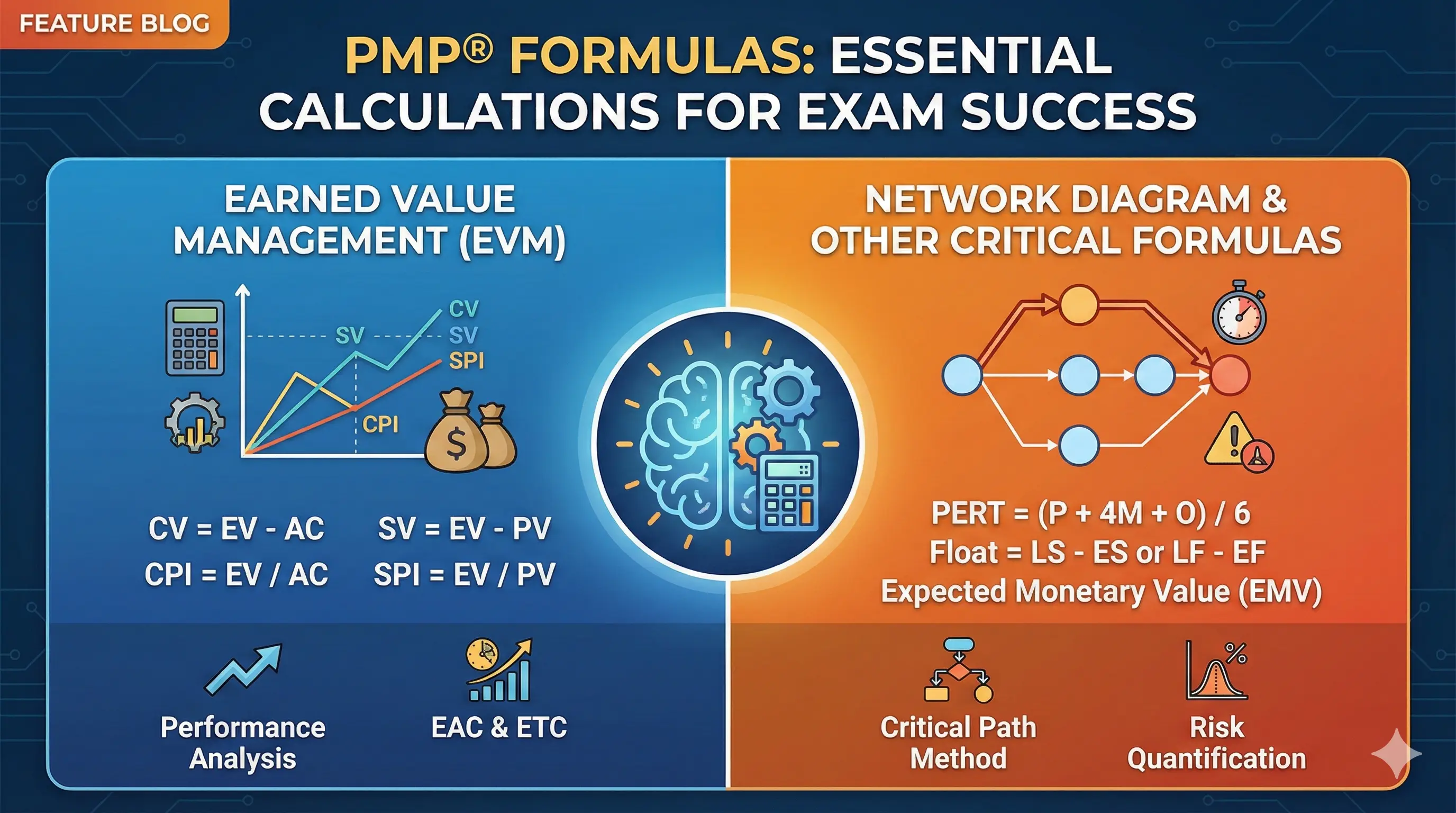
The PMP exam includes 10-15 questions involving formulas, emphasizing interpretation over pure calculation. Earned Value Management (EVM) is central: know PV (planned work), EV (completed work), and AC (actual cost). Variances show status: SV = EV - PV (schedule), CV = EV - AC (cost)—positive is good. Performance indices show efficiency: SPI = EV/PV, CPI = EV/AC—greater than 1 is good. Forecasting formulas predict final cost: EAC = BAC/CPI is most common. Communication channels = n(n-1)/2 shows complexity growing with team size. PERT uses three estimates: Expected = (O + 4M + P)/6. Create a formula sheet for exam day brain dump, focus on EVM, and practice interpreting results—knowing what CPI of 0.85 means matters more than calculating it.
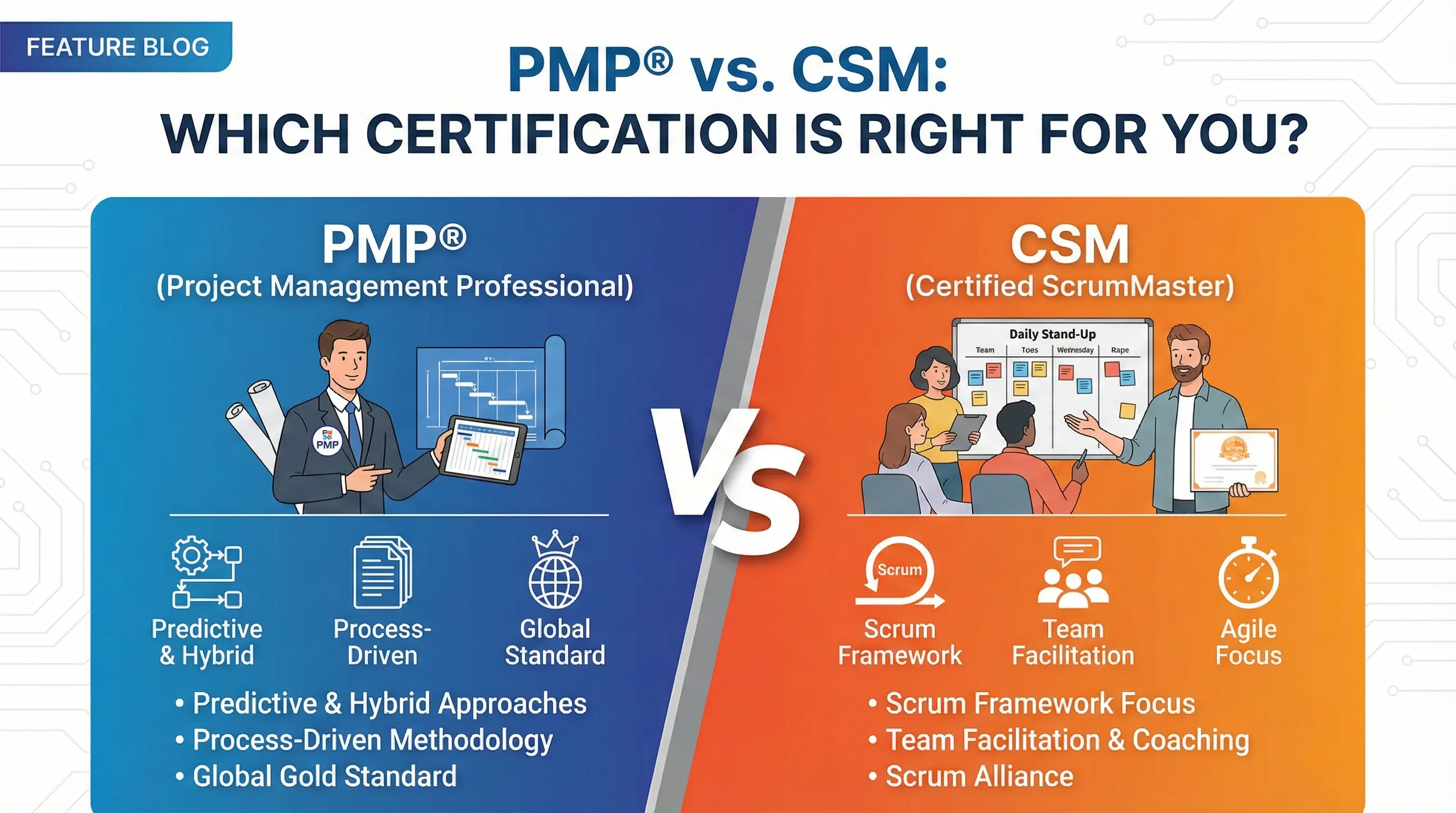
PMP and CSM certify different roles: PMP validates project managers who lead and direct work; CSM validates Scrum Masters who facilitate self-organizing teams. PMP (from PMI) requires 36-60 months leadership experience, 35 education hours, and passing a challenging 180-question exam—total cost $700-1,500+. CSM (from Scrum Alliance) has no experience requirements, just a mandatory 16-hour course (~$1,000-1,500 including exam) and a straightforward 50-question test. PMP is recognized across all industries; CSM primarily in tech. Choose PMP for PM leadership careers and maximum versatility. Choose CSM for Scrum Master roles in agile tech environments or as an entry point before qualifying for PMP. Many professionals eventually hold both, combining broad PM authority with agile-specific credentials.
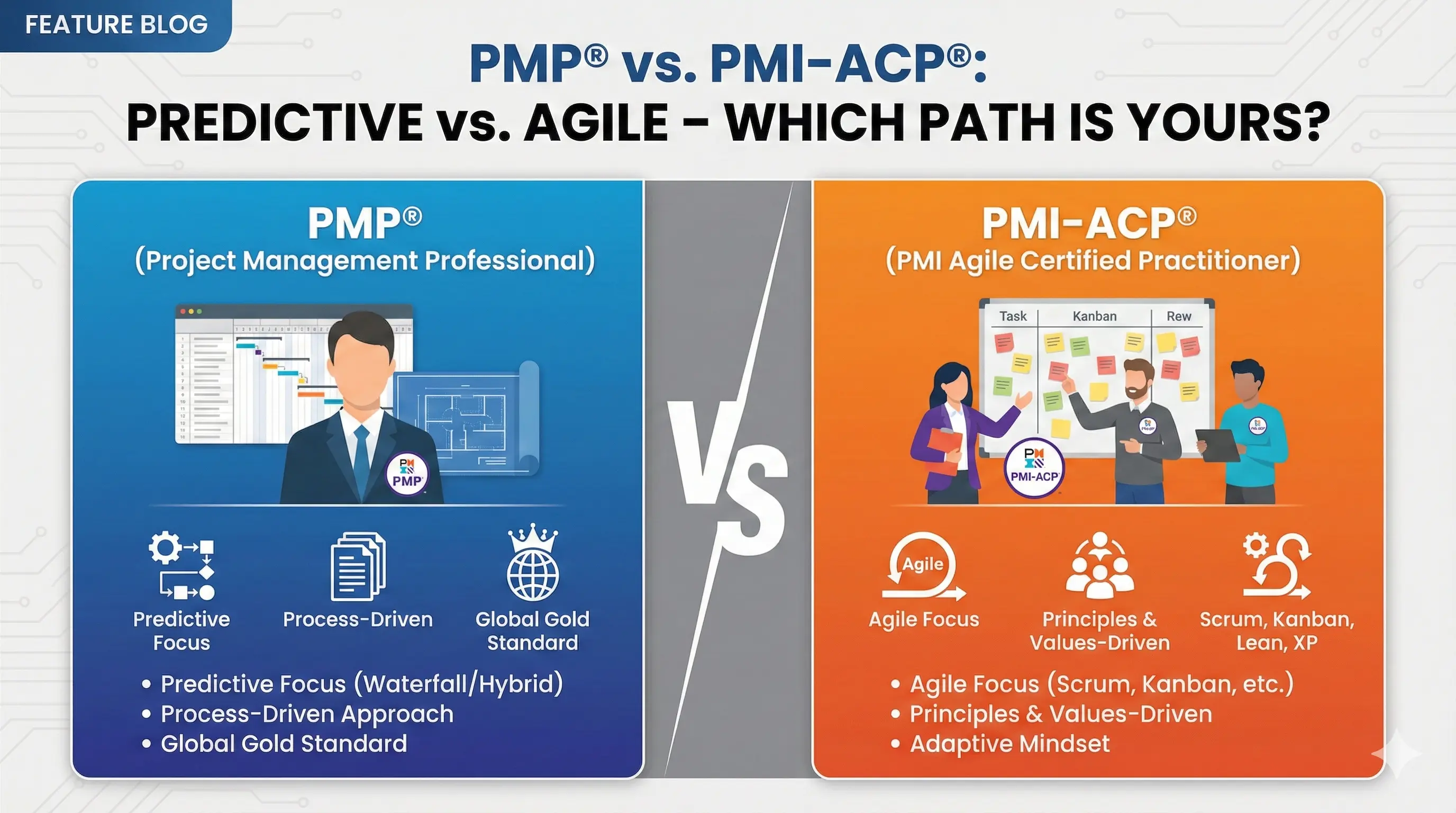
PMP and PMI-ACP are both PMI certifications but serve different purposes. PMP covers comprehensive project management across predictive, agile, and hybrid methodologies—requiring 36-60 months of leadership experience, 35 education hours, and passing a 180-question exam. PMI-ACP focuses exclusively on agile practices (Scrum, Kanban, Lean, XP) with lower requirements: 12 months general + 8 months agile experience, 21 education hours, and a 120-question exam. Choose PMP for career versatility, traditional industries, and senior PM roles. Choose PMI-ACP for agile-specific roles in tech, earlier career access to PMI certification, or to complement an existing PMP. When uncertain, PMP's broader recognition makes it the safer default for most PM careers.
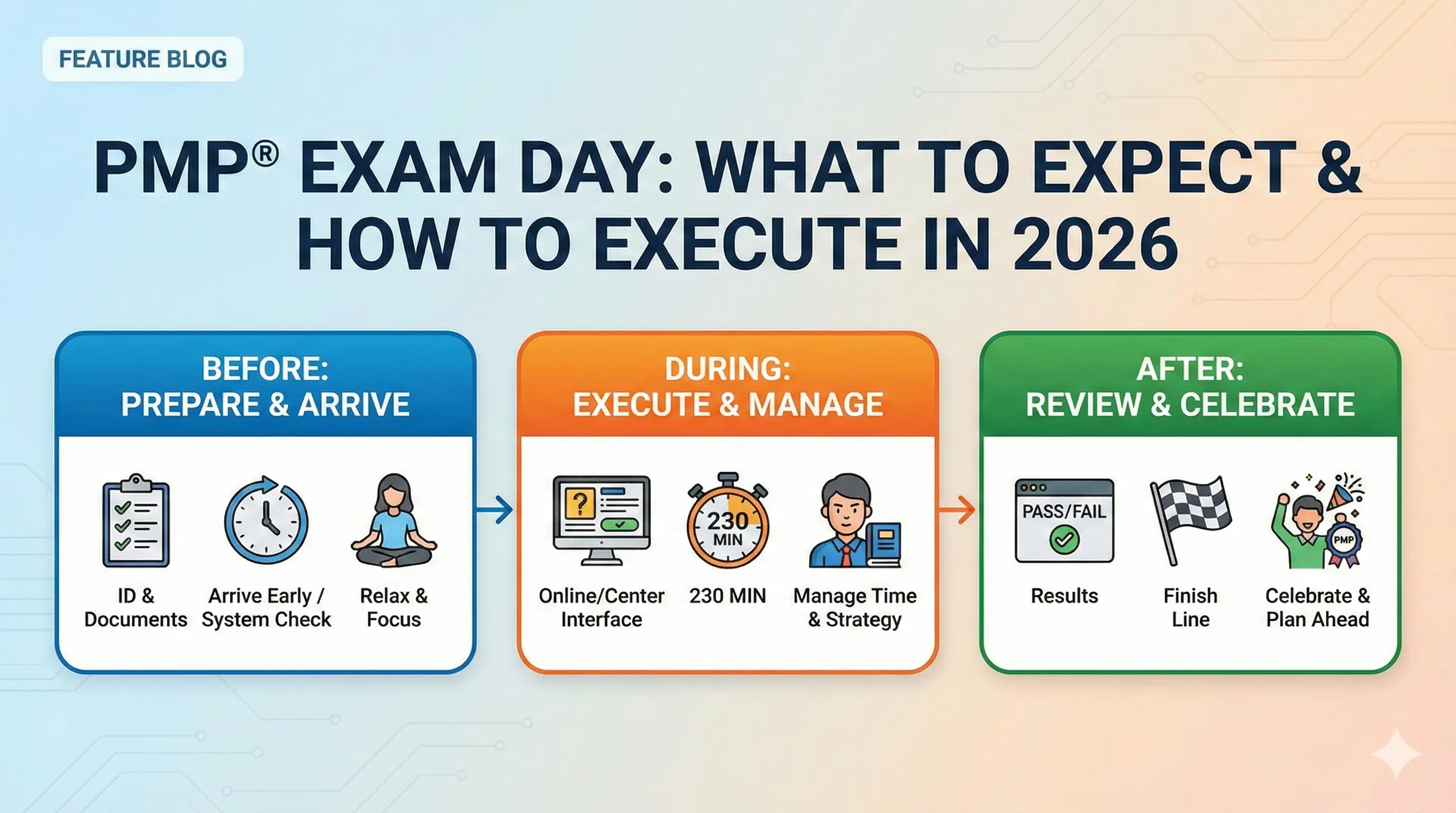
The final week before your PMP exam should focus on light review and rest—no cramming. For test centers: arrive 30 minutes early with valid ID, store personal items in a locker, and plan to take both 10-minute breaks (after questions 60 and 120) for snacks, water, and mental reset. For online proctoring: run system checks 24+ hours ahead, prepare a private room with clear desk and no dual monitors, and expect a 15-30 minute check-in process. During the exam, maintain 77-second-per-question pacing, flag difficult questions and move on, and review flagged items before each break (you can't return to previous sections). Preliminary results appear immediately after finishing; detailed score reports arrive within 1-3 days. If you don't pass, analyze your score report, adjust your study plan, and use your remaining attempts within the one-year eligibility window.
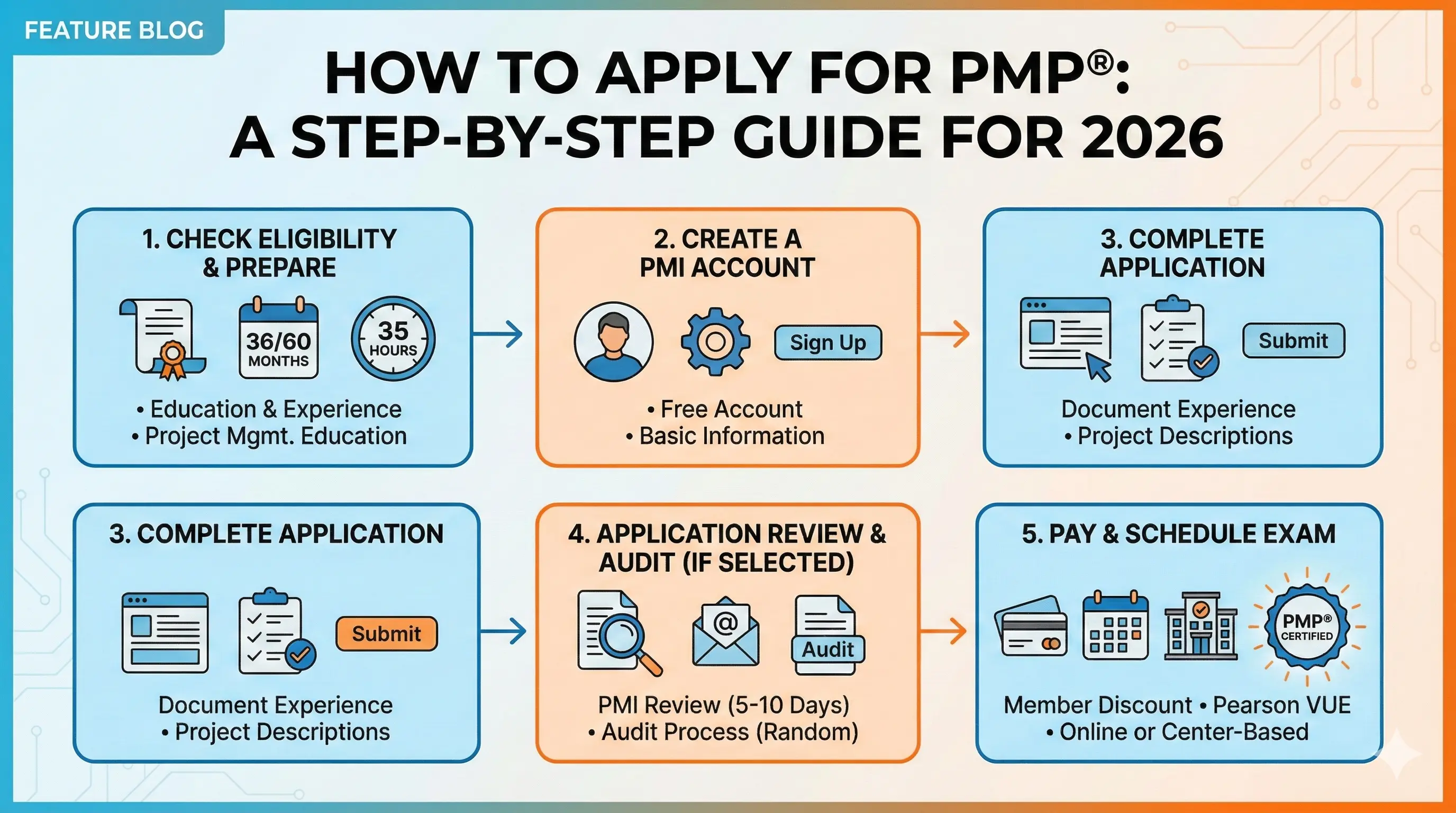
The PMP application requires careful preparation: confirm eligibility, gather project documentation, complete 35 hours of PM education, join PMI for the exam discount, and allow 1-2 weeks to apply. Create a PMI account, join as a member ($149), then start the application. Enter your education background and document project experience—the most critical section. Each project needs clear descriptions demonstrating you led and directed the work, mapped to five process groups (Initiating, Planning, Executing, Monitoring/Controlling, Closing). Document PM education with course details and keep certificates for potential audit. About 10-15% of applications are randomly audited, requiring transcripts, course certificates, and supervisor signatures. After approval, you have one year to schedule and pass through Pearson VUE, choosing test center or online proctoring.
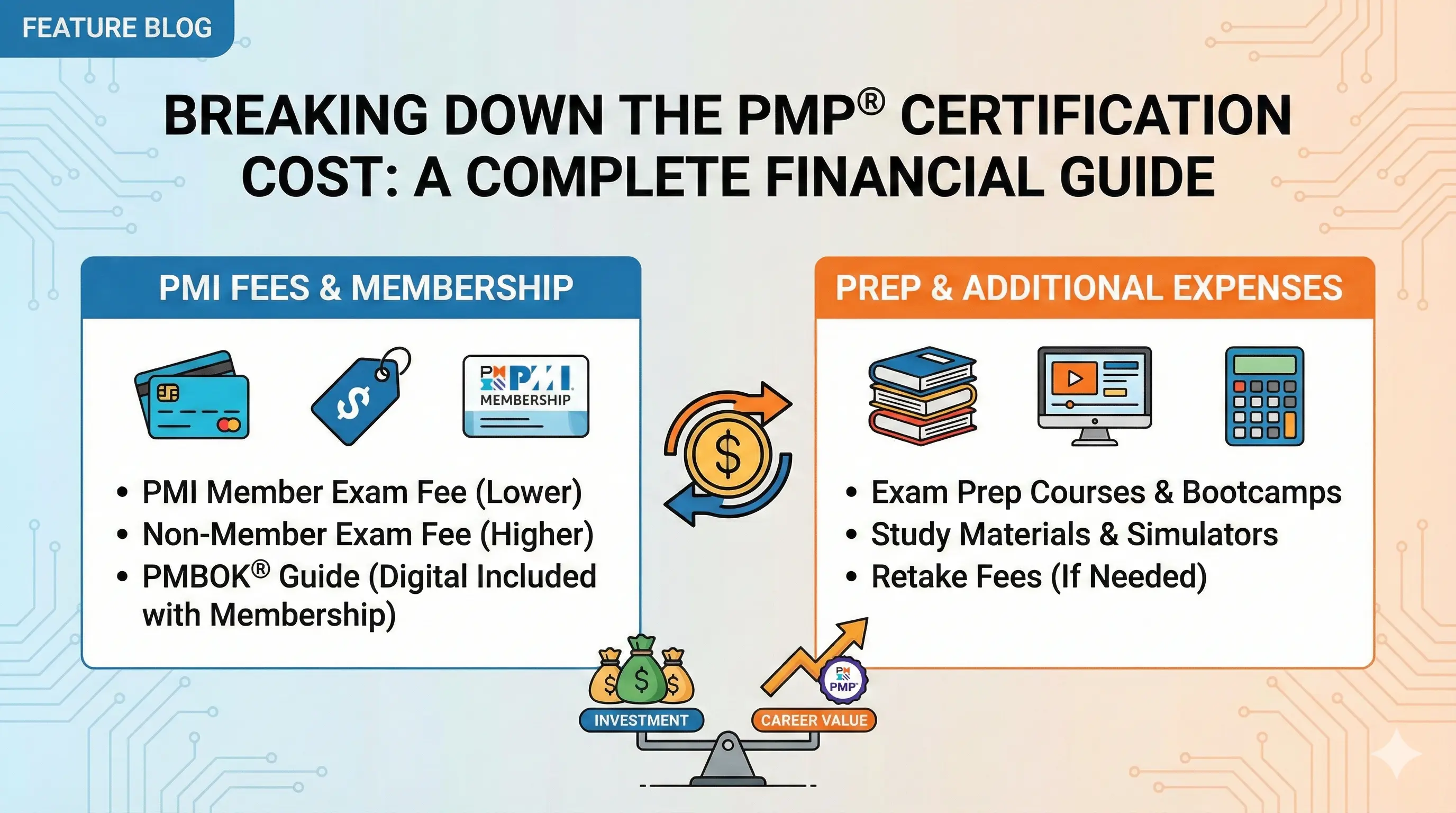
The PMP exam costs $405 for PMI members or $555 for non-members. PMI membership ($149 first year) pays for itself immediately through the $150 exam fee savings plus free access to PMBOK Guide and Agile Practice Guide. The 35-hour education requirement costs anywhere from $30 (budget online courses) to $2,500+ (premium bootcamps). Total investment ranges from ~$700-900 (budget path) to ~$1,000-1,400 (typical) to $2,000-3,500+ (premium). The ROI is compelling: PMP holders earn 20-25% more on average, meaning most candidates break even within weeks of a salary increase. Join PMI before applying, don't overbuy resources, check for employer reimbursement, and invest in passing the first time.
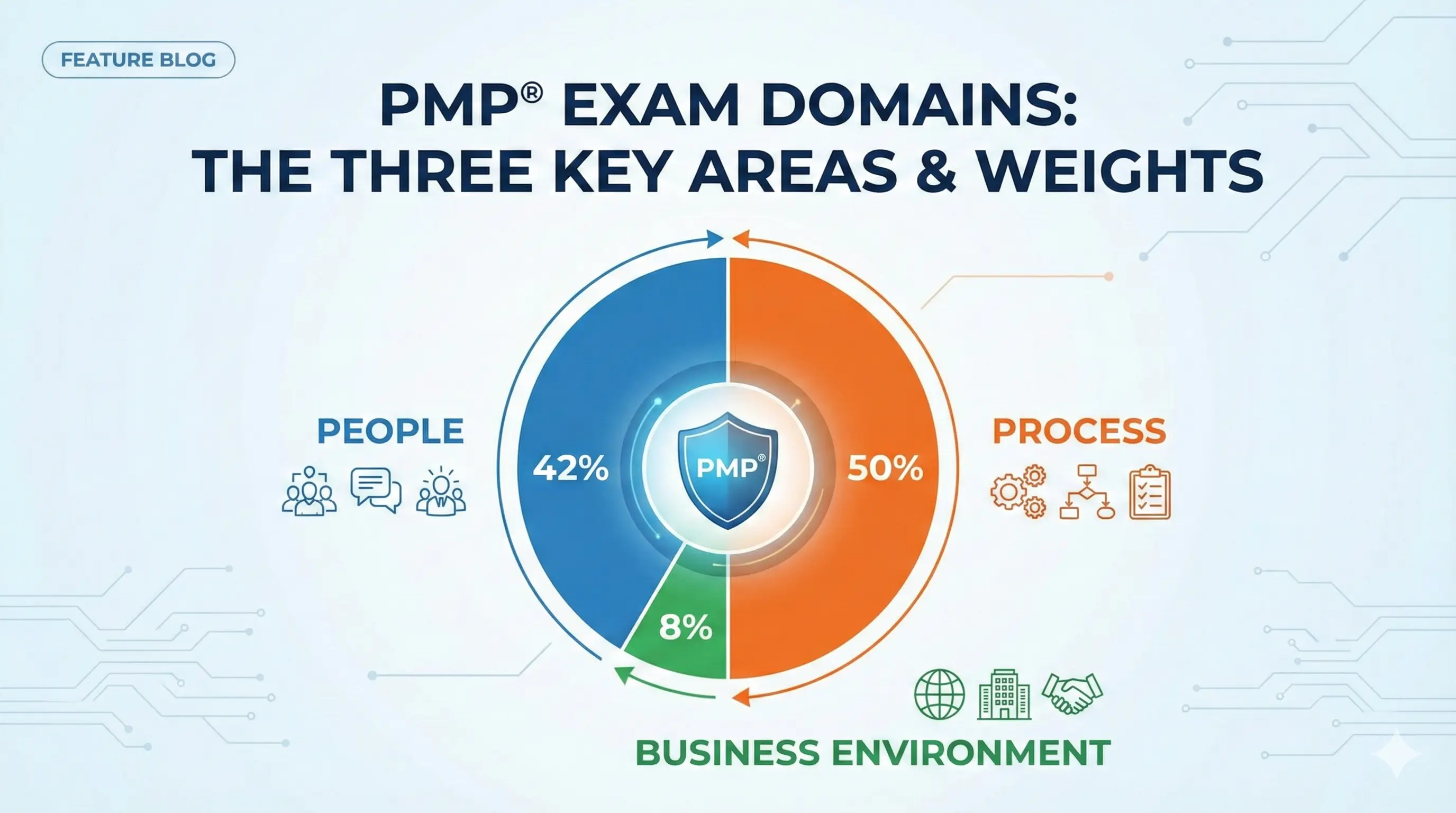
The PMP exam tests three domains: People (42%), Process (50%), and Business Environment (8%). People covers leadership, team management, conflict resolution, and emotional intelligence—with heavy emphasis on servant leadership for agile contexts. Process covers technical project management: planning, execution, risk, quality, procurement, and earned value management across predictive, agile, and hybrid approaches. Business Environment connects projects to organizational strategy through benefits realization, compliance, and change management. Predictive and agile aren't separate sections—both approaches appear throughout all domains. Allocate study time proportionally but don't neglect Business Environment, as its concepts support questions across the exam.
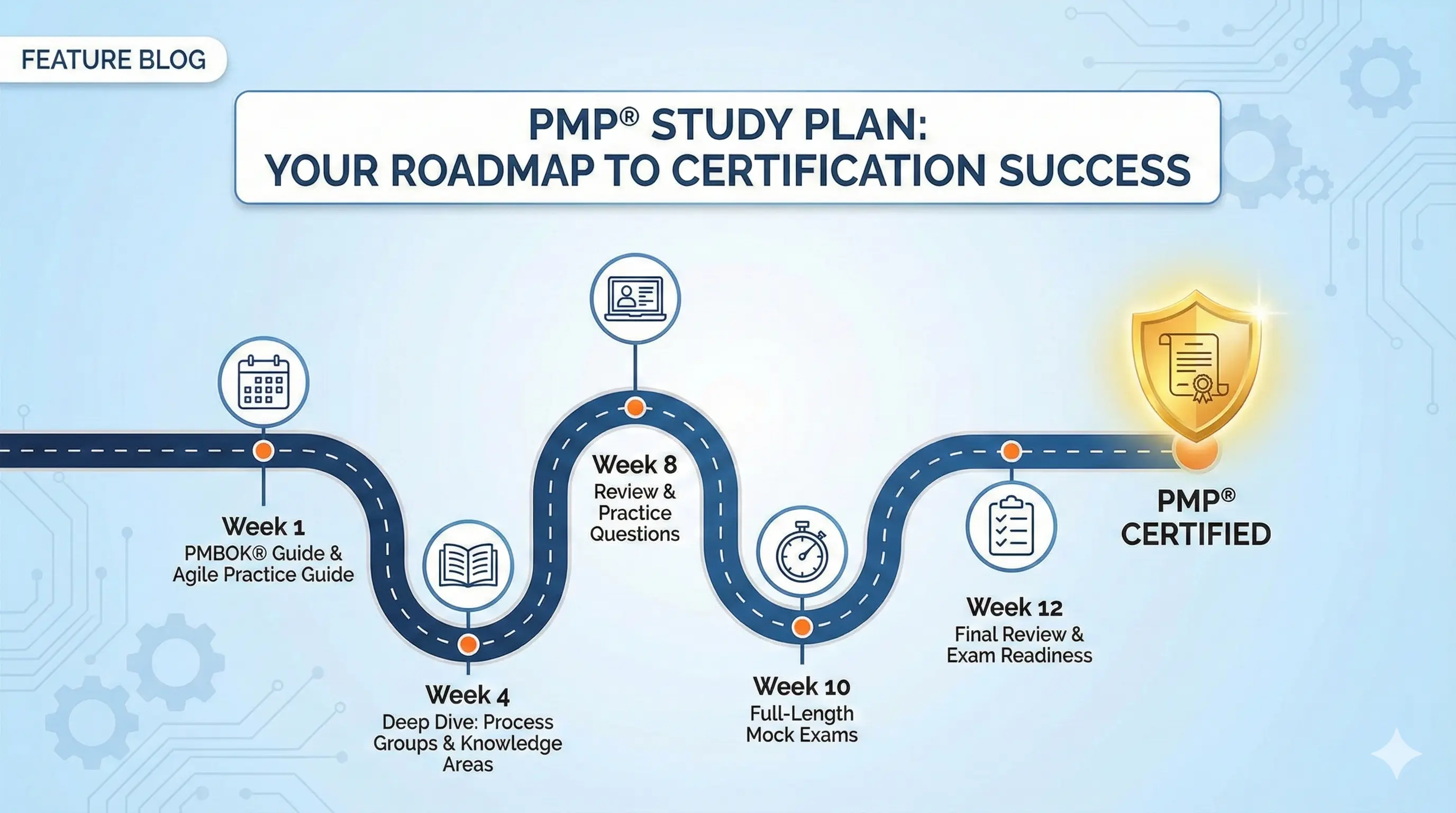
Most PMP candidates need 150-200+ hours over 2-4 months to prepare adequately. Choose a study plan matching your schedule: 8-week intensive (3-4 hours/day), 12-week balanced (1.5-2 hours/day plus weekends), or 16-week extended (1 hour/day plus weekends). Essential resources include a 35-hour education course, PMBOK Guide 7th Edition, Agile Practice Guide, and a quality practice question bank. Practice questions are the core of preparation—review explanations for every question, track performance by domain, and target weak areas. You're ready to schedule when you're consistently scoring 75%+ on mock exams, comfortable across all domains, and can explain concepts rather than just recognize answers.
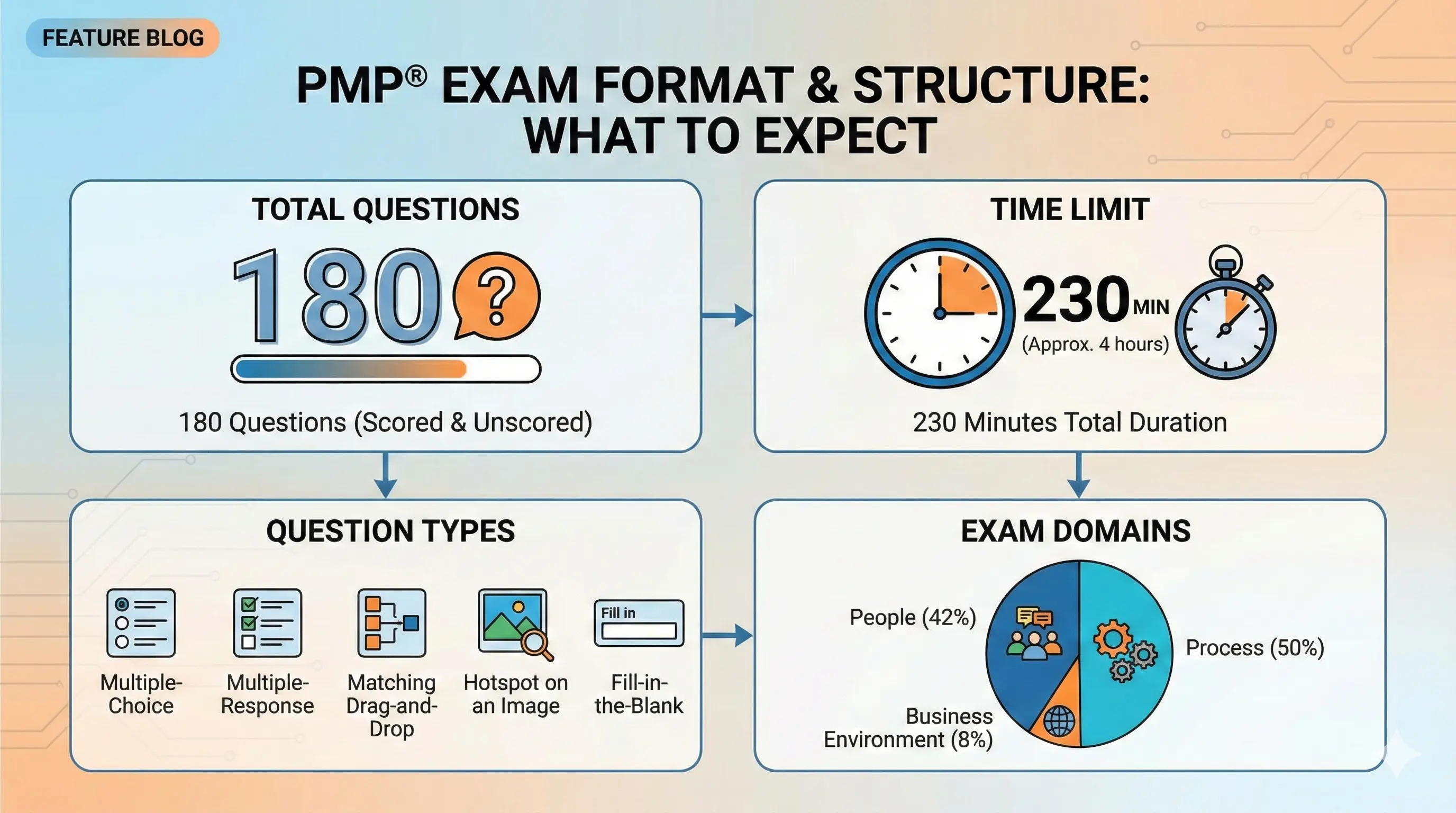
The PMP exam consists of 180 questions in 230 minutes (about 77 seconds per question), with two optional 10-minute breaks after questions 60 and 120. Question types include multiple choice, multiple response, matching, hotspot, and fill-in-the-blank—most are scenario-based with long stems. Content splits roughly 50/50 between predictive and agile/hybrid approaches. Scoring is pass/fail using psychometric analysis with no published passing score; aim for 70-75%+ on practice exams. Choose between Pearson VUE test centers or OnVUE online proctoring based on your workspace reliability and comfort. Use a flag-and-move strategy and take both breaks to manage the mental marathon.
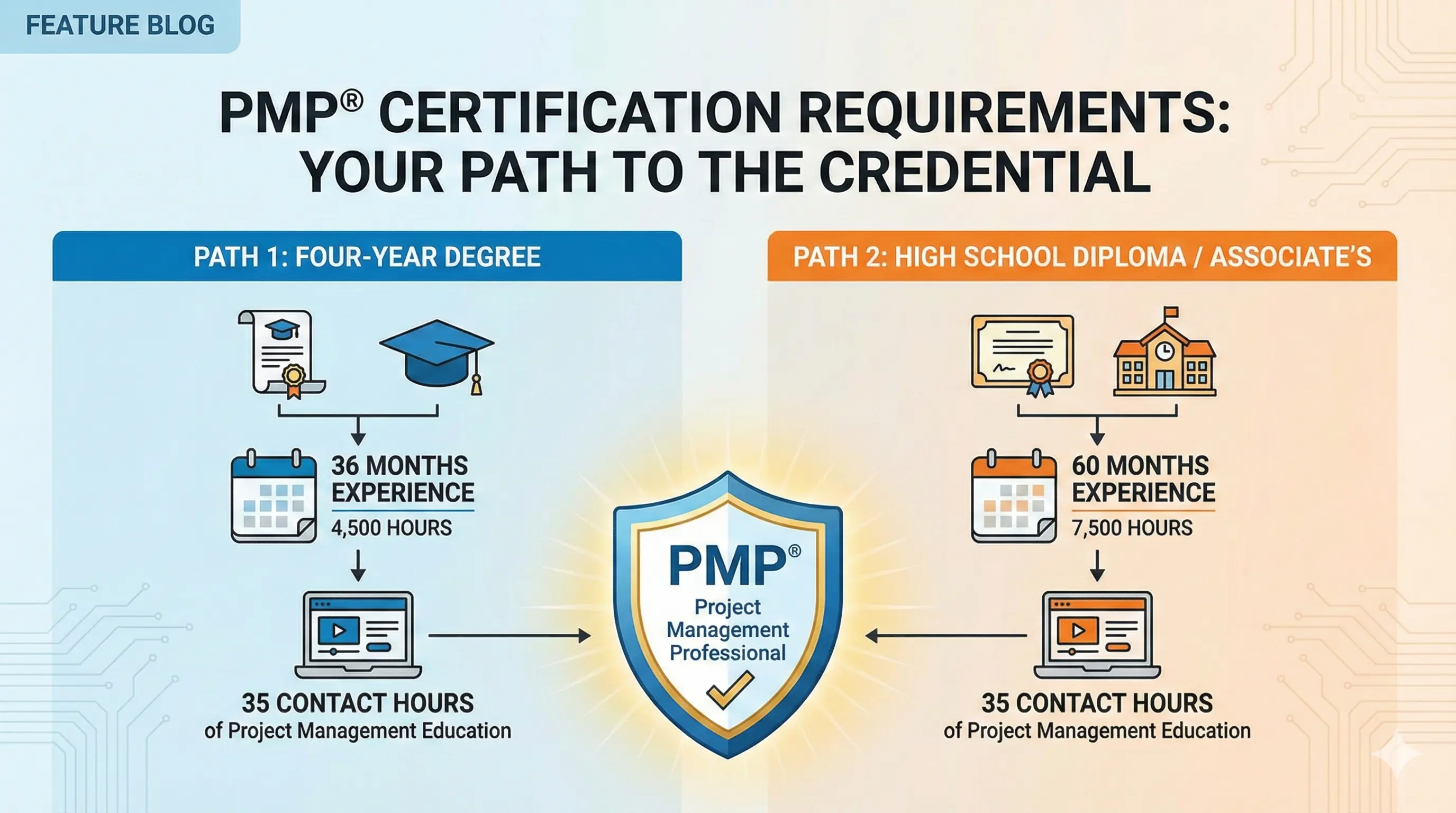
The PMP certification requires a combination of education, project leadership experience, and 35 hours of PM training. Path 1 (bachelor's degree) requires 36 months leading projects; Path 2 (high school/associate's) requires 60 months. "Leading and directing" means making decisions, managing deliverables, and controlling project elements—not just participating. Document experience by mapping to PMI's five process groups with specific, action-oriented descriptions. About 10-15% of applications are randomly audited, so keep certificates and supervisor contacts ready. If you don't qualify yet, consider starting with CAPM or continuing to build experience.

CAPM and CSM are both entry-level certifications but serve different purposes. CAPM (PMI) covers broad project management across methodologies and costs $300-500 with self-study. CSM (Scrum Alliance) focuses specifically on the Scrum framework and costs $1,000-1,500 with required training. Choose CAPM for traditional industries and broad PM careers; choose CSM for tech/software and Scrum Master roles specifically.
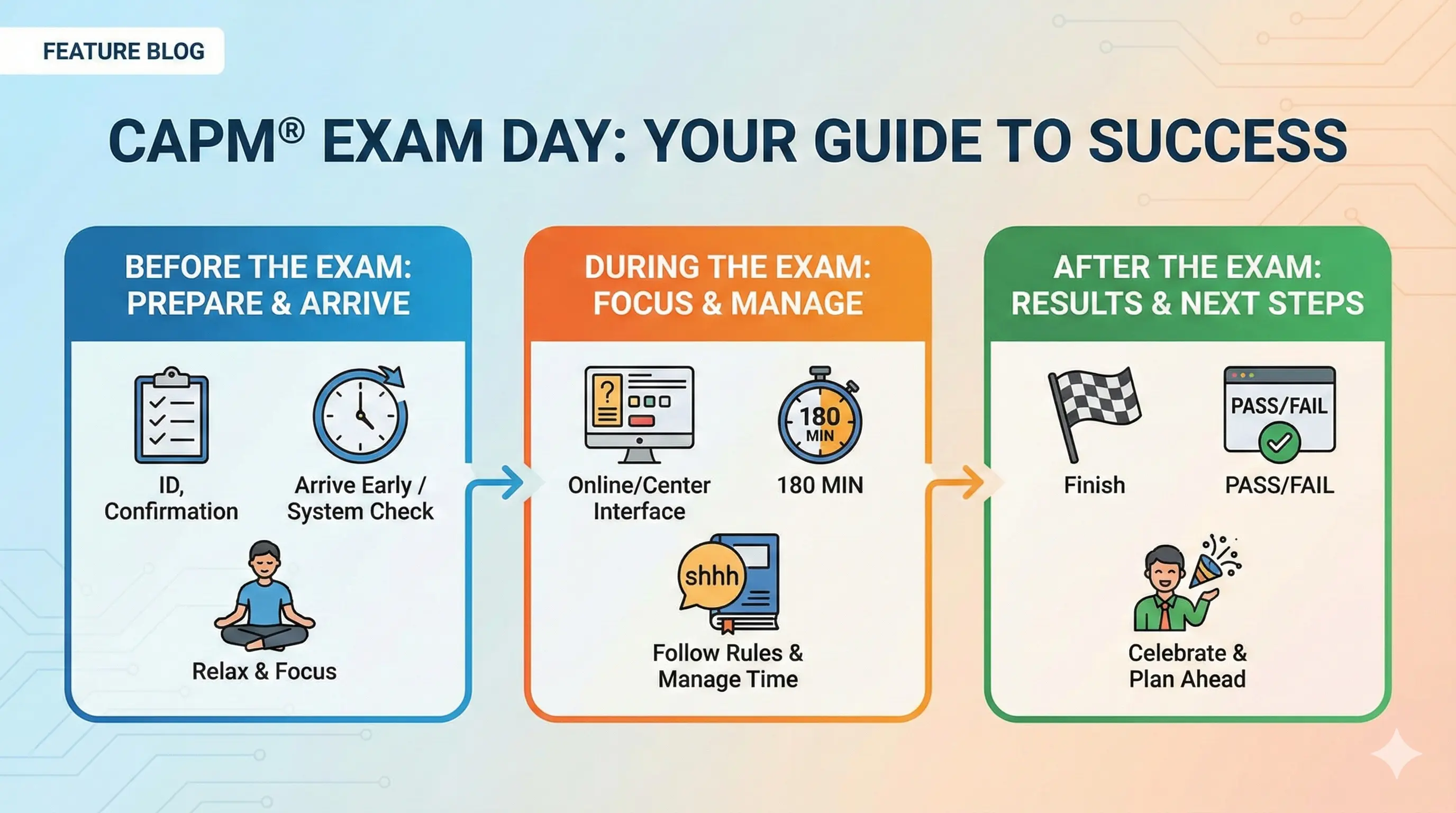
CAPM exam day success starts the night before with light review and good sleep. At test centers, arrive 30 minutes early with valid ID. For online proctoring, ensure a clear desk, quiet room, and stable technology. During the exam, pace yourself at 72 seconds per question, use the flag feature for uncertain answers, and take the optional break at question 75. Results are immediate—pass or fail.
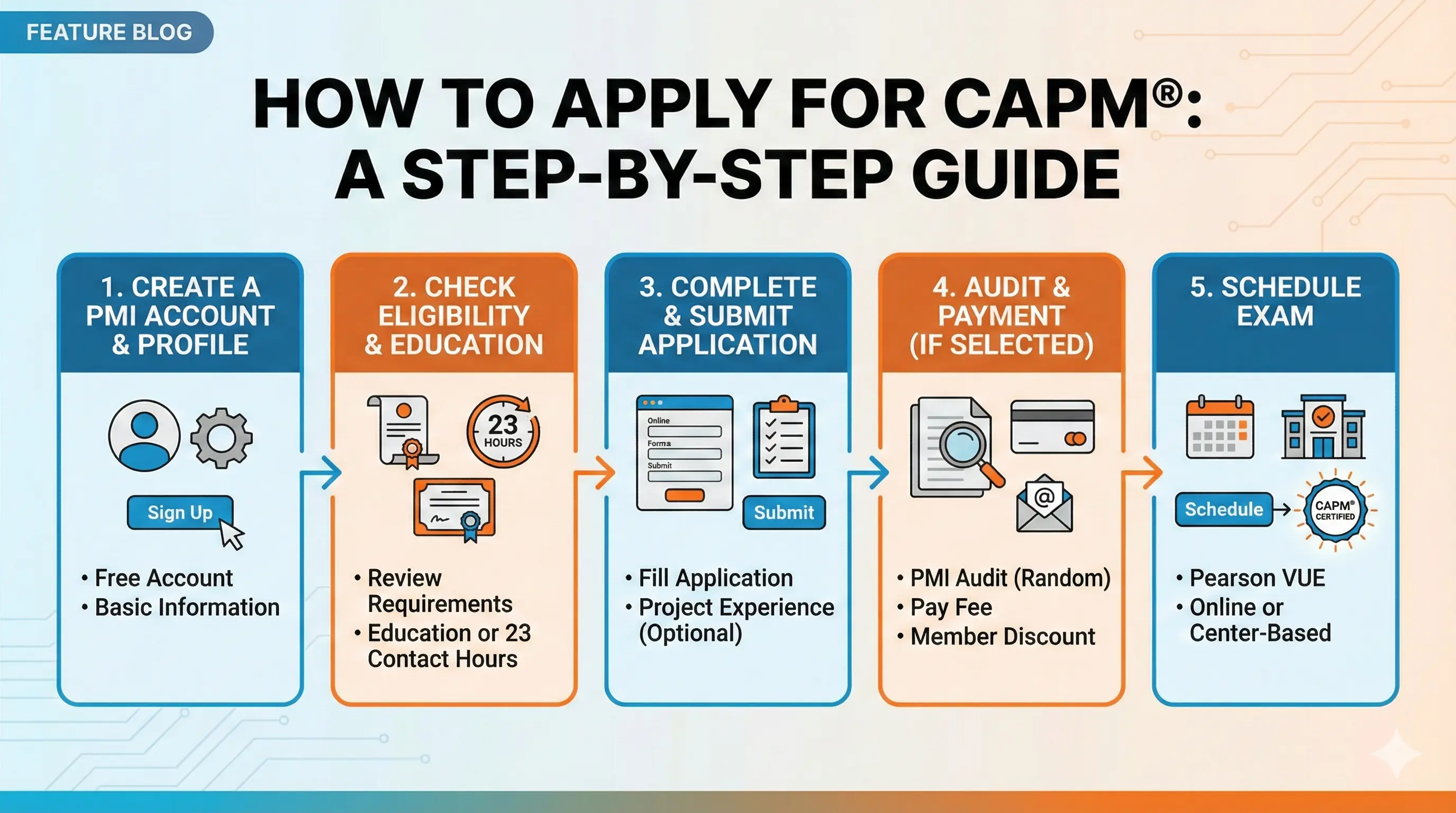
The CAPM application takes 30-45 minutes to complete through PMI.org. You'll create an account, enter your educational background, document your 23 PM education hours with course details, pay the exam fee ($225 members/$300 non-members), and submit. PMI reviews applications in 5-10 business days, after which you can schedule your exam through Pearson VUE.